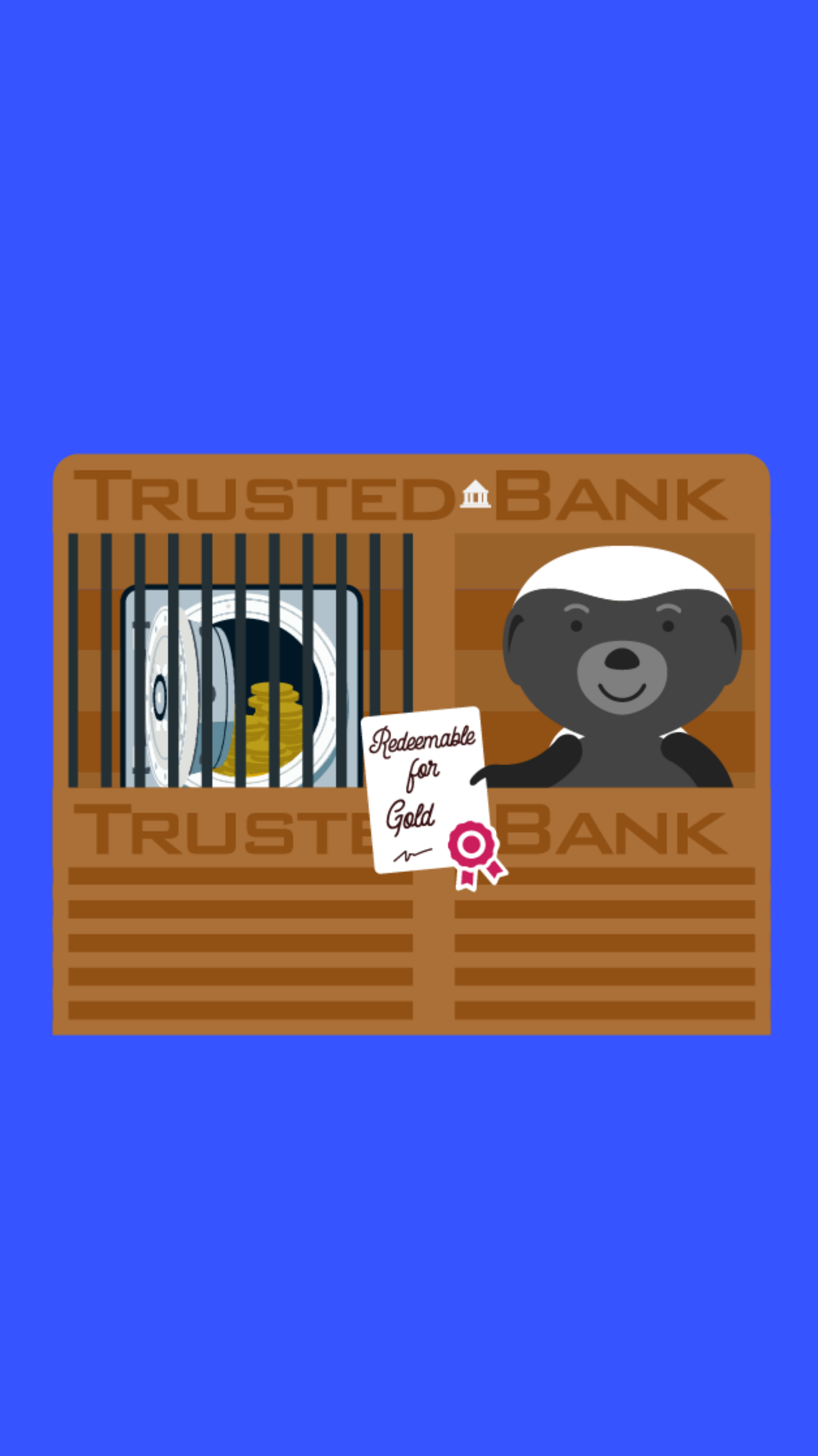
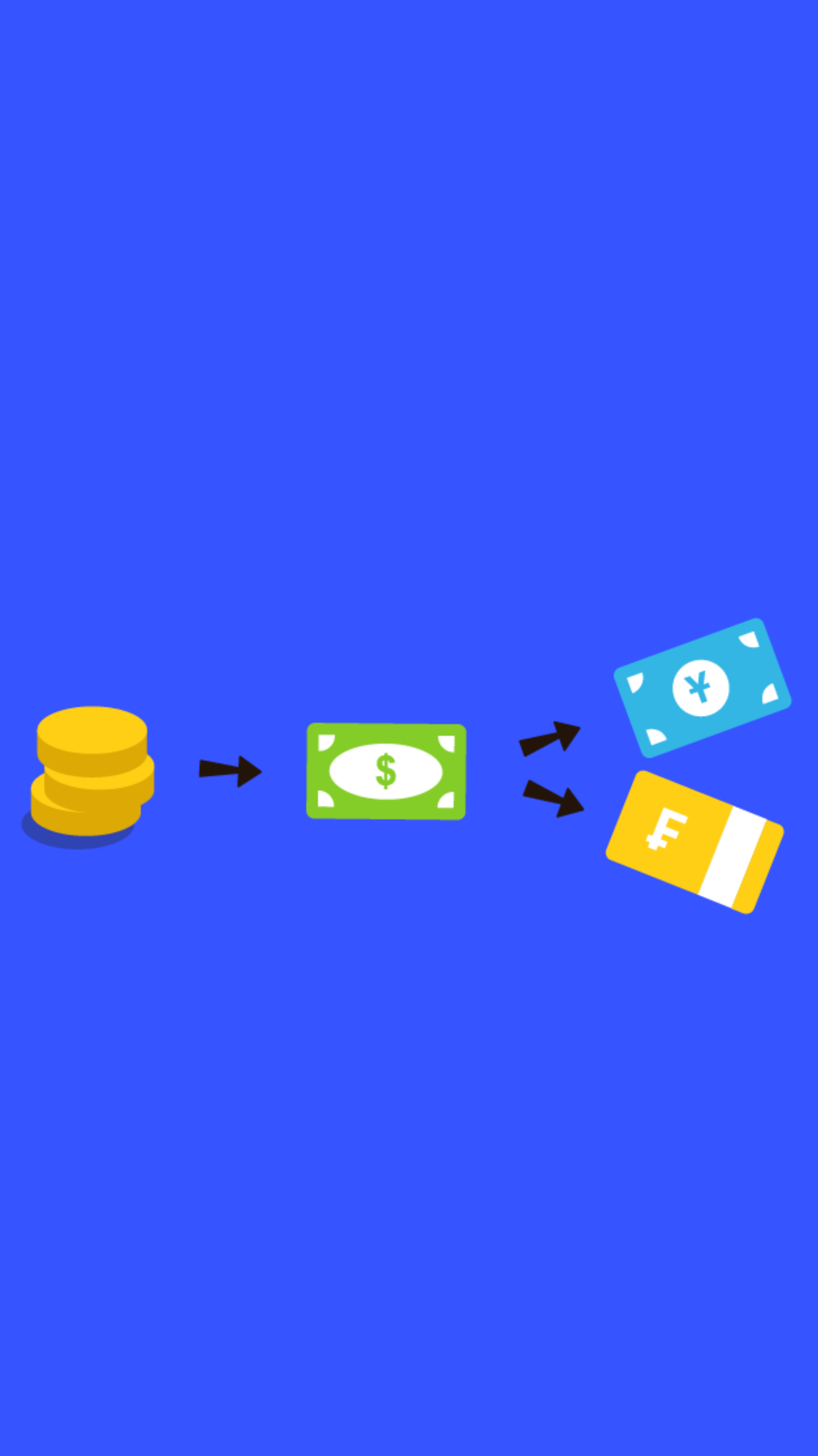
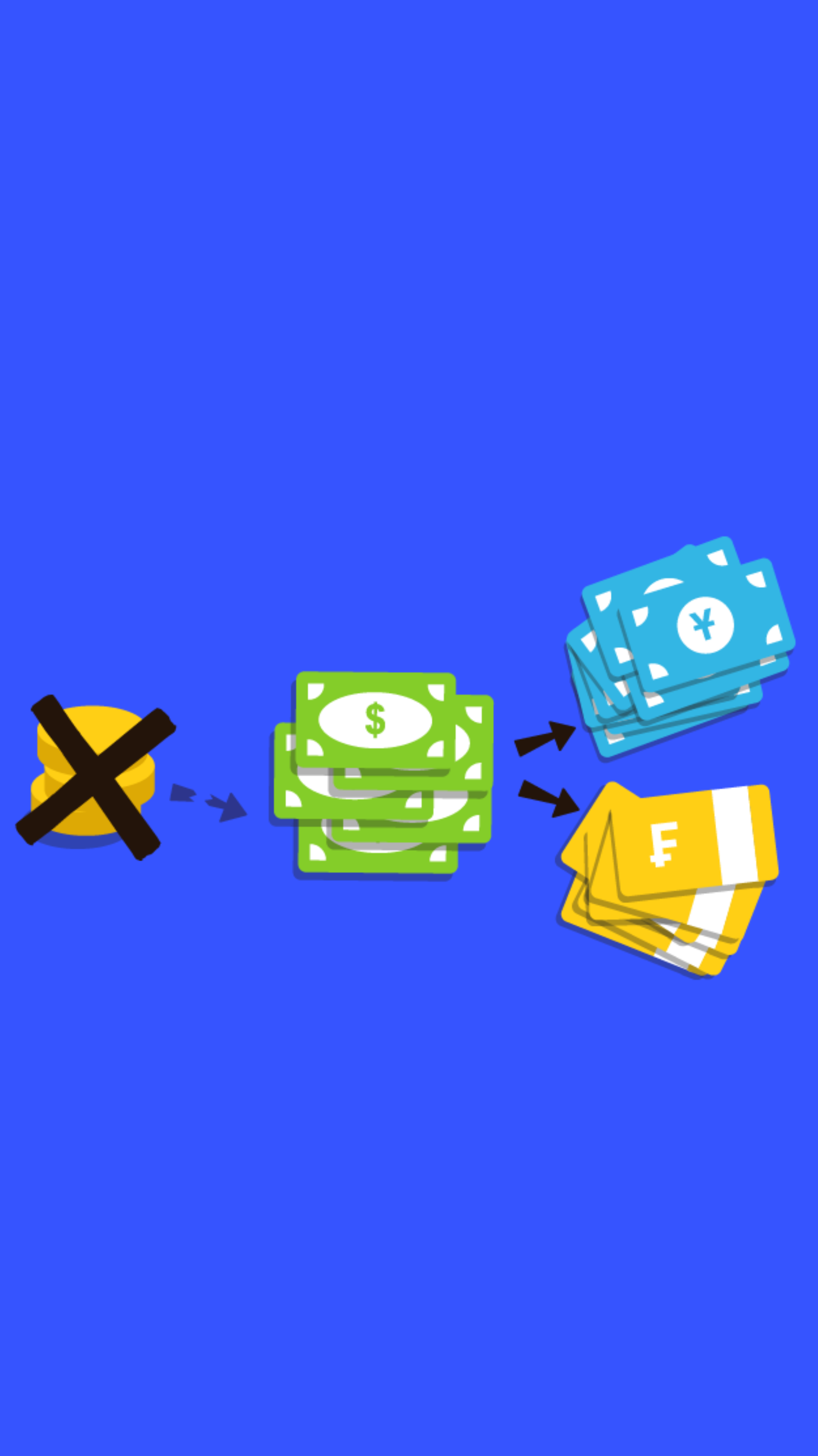
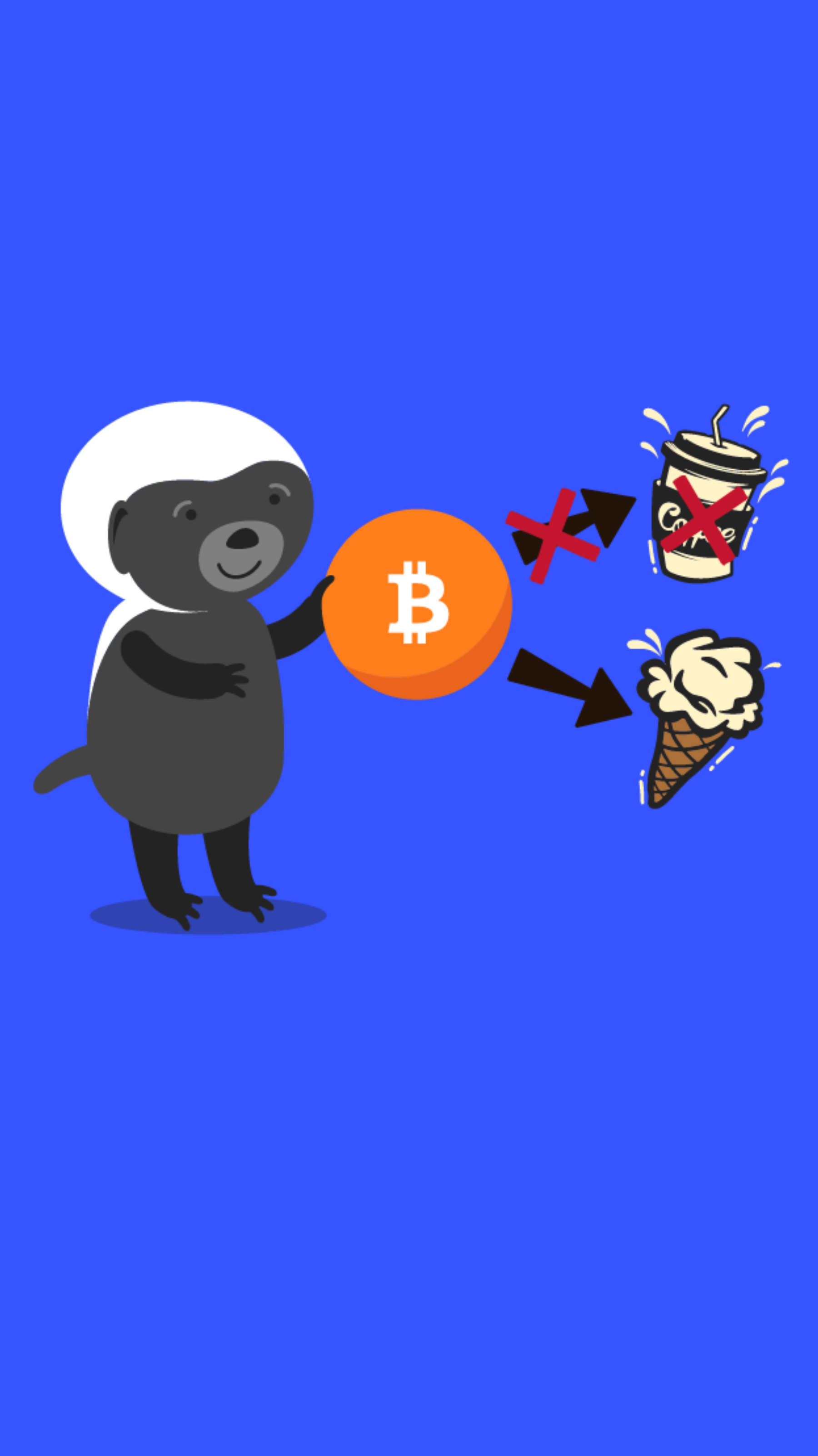
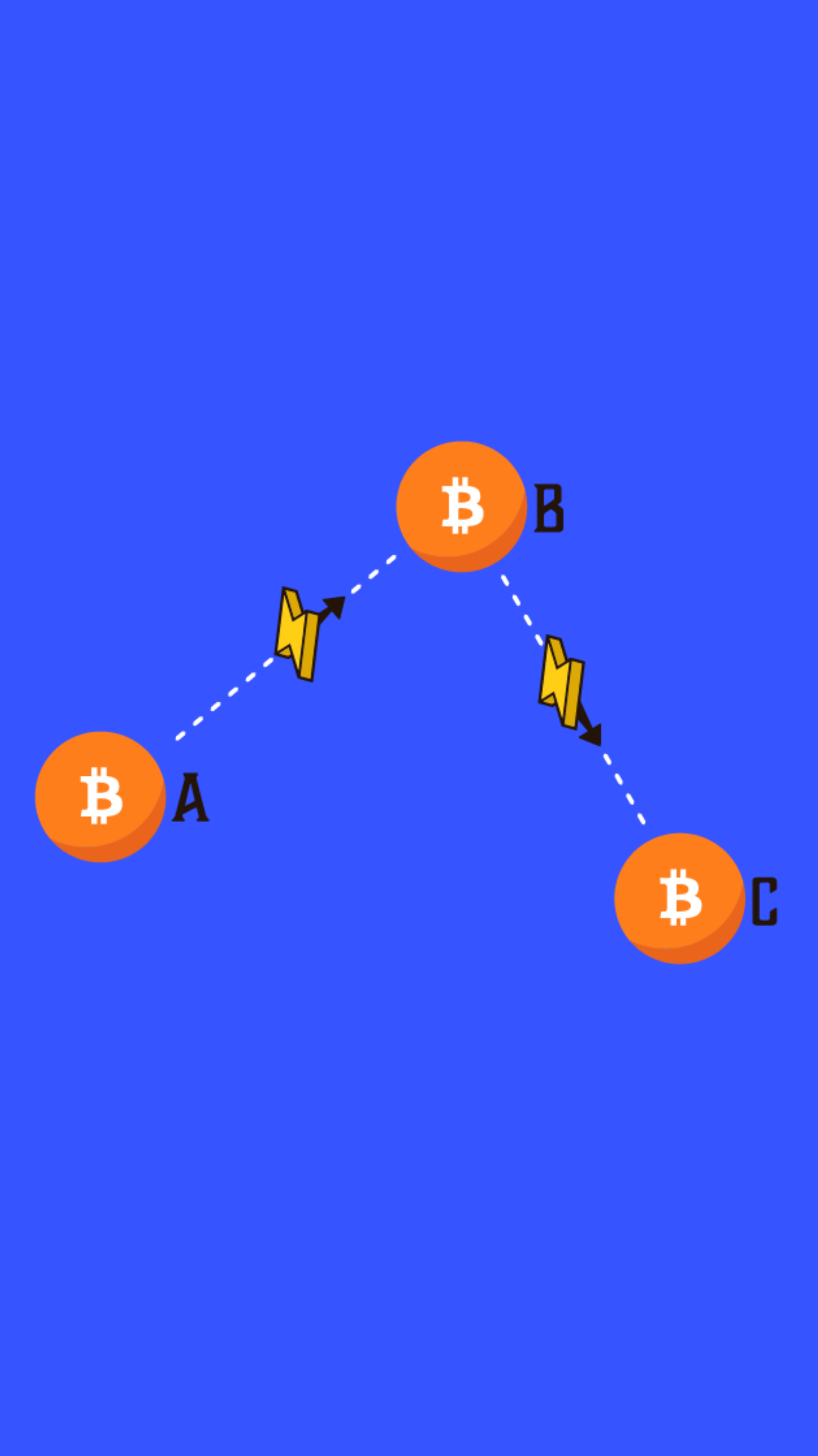
> This is part 1 of 2 of the full documentation (pages 1–100 of 143).
> The content is paginated: fetch every part to see all of it.
> Next part: https://earn.blink.sv/llms-full.txt/1
> Page index: https://earn.blink.sv/llms.txt
# Earn Overview
InApp course for beginners to learn about bitcoin and earn sats for progress made
1. Bitcoin: What is it?
1. So what exactly is Bitcoin?
2. I just earned a “Sat". What is that?
3. Where do the bitcoins exist?
4. Who controls Bitcoin?
5. If Bitcoin is digital money, can’t someone just copy it — and create free money?
2. What is money?
1. Why does money have value?
2. Which coincidence does money solve?
3. What are some items that have been historically used as a unit of money?
4. Why were stones, seashells and gold used as units of money?
5. What is the primary reason money is important?
6. Who can legally print US Dollars, anytime they wish?
3. How does money work?
1. Who creates fiat money, such as US Dollars or Swiss Francs?
2. Why should I care about the government controlling fiat money?
3. What does it mean when the government prints money?
4. What happens to the value of all fiat money over time?
5. What are some other issues that exist with fiat money?
4. Bitcoin: Why is it special
1. Is the supply of bitcoin limited forever?
2. Is bitcoin centralized?
3. Can people counterfeit Bitcoin?
4. What is the smallest amount of Bitcoin one can own, or use?
5. Is the Bitcoin network secure?
6. Has Bitcoin ever been hacked?
5. The Origins of Money
1. The origins of money
2. Primitive forms of money
3. Anticipating Demand
4. The Key to Facilitating Trade
5. The Benefits of Converging on a Single Store of Value
6. Attributes of a good Store of Value
1. Some stores of value are better than others
2. Durability is an important attribute for a good store of value
3. The good must be easy to transport and store
4. One specimen should be interchangeable with another of equal quantity
5. The good must be easy to quickly identify and verify as authentic
6. The good must be easy to subdivide
7. A monetary good must be scarce
8. An established history of being valued by society
9. No permission required
7. The Evolution of Money
1. Four Stages of Money: Collectible
2. Four Stages of Money: Store of Value
3. Four Stages of Money: Medium of Exchange
4. Four Stages of Money: Unit of Account
5. Partial Monetization
6. Bitcoin is in the stage of monetization
8. The Evolution of Money II
1. Money is not a government creation
2. The primary function of money
3. Monetary Metals
4. Understanding the Stock to Flow Ratio
5. Hard Money and Easy Money
9. The Evolution of Money III
1. Convergence on Gold
2. The Origins of Paper Money Backed by Gold
3. The Invention of Fractional Reserve Banking
4. Problems of Fractional Reserve Banking
5. Modern Central Banking
6. From Gold to Gold-Backed
7. The Bretton Woods System
8. The Global Reserve Currency
10. The Evolution of Money IV
1. The Nixon Shock
2. The Fiat Era
3. Digital Fiat
4. Plastic Credit
5. The Double Spending Problem
6. Satoshi's Breakthrough
7. Purpose-built for the Digital Age
8. Central Bank Digital Currencies
11. Bitcoin: Why was it created?
1. The Root Problem
2. Bitcoin's Creator Satoshi Nakamoto
3. Fiat Currencies Require Trust
4. Money Printing and Credit Expansion
5. The Genesis Block
6. Bitcoin is the Result of Decades of Research
12. Bitcoin: How does it work?
1. Peer-to-Peer Network
2. What is a blockchain exactly?
3. Public Key Cryptography
4. Bitcoin Addresses and the Master Public Key
5. Mining
6. Proof of Work
7. Difficulty Adjustment
8. The Halving
13. Lightning Network
1. Drawbacks of Bitcoin
2. The Blocksize Wars
3. The Lightning Network
4. Instant Payments
5. Micropayments
6. Scalability
7. How does Lighning work?
8. Routing
14. Bitcoin Criticisms & Fallacies I
1. Is bitcoin a bubble?
2. "It's too volatile!"
3. Should money be backed by something?
4. Will bitcoin become obsolete one day?
5. Is bitcoin's energy consumption excessive?
6. Wait, are you telling me that bitcoin can be used to tap into stranded energy?
15. Bitcoin Criticisms & Fallacies II
1. Bitcoin is too dependent on the Internet
2. Bitcoin is for Criminals
3. Bitcoin is a Ponzi Scheme
4. Bitcoin is too slow
5. Bitcoin's Supply Limit Could Be Corrupted
6. Governments Will Ban Bitcoin
16. Bitcoin Criticisms & Fallacies III
1. Bitcoin Ownership Is Concentrated on a Few Users
2. Bitcoin Mining Is Centralized
3. Bitcoin is too expensive
4. Bitcoin transaction costs are prohibitively high
5. The Misconception of Bitcoin Hoarding
6. Bitcoin is not scarce because there are thousands of cryptocurrencies
17. Bitcoin and Economics I
1. How limited resources are allocated and competed for
2. Monetary Premium
3. Gresham's Law
4. Thier's Law
5. The Cantillon Effect
6. Schelling Point
18. Bitcoin and Economics II
1. Opportunity Cost
2. Time Preference
3. The Impossible Trinity
4. Jevons Paradox
5. Power Laws
6. Winner-Take-All Effects
19. Bitcoin and Economics III
1. Unit Bias
2. Veblen Good
3. Malinvestment
4. Asymmetric Payoff
5. Ansoff Matrix
# Chapter 101 - Bitcoin: What is it?
## Bitcoin: What is it?
# 101.1 Lesson - whatIsBitcoin
**Screen:** whatIsBitcoin
**Headline:** So what exactly is Bitcoin?
**Reward:** 1
**Text:** Bitcoin is digital money. It can be transferred instantly and securely between any two people in the world — without the need for a bank or any other financial company in the middle.
\=================================================================
## QUIZ
**Question:** So what exactly is Bitcoin
**Answer:** Digital Money
**Feedback:** Correct. You just earned 1 “sat”!
**Correct:** true
**Answer:** A video game
**Feedback:** Incorrect, please try again.
**Correct:** false
**Answer:** A new cartoon character
**Feedback:** Nope. At least not one that we know of!
**Correct:** false
# 101.2 Lesson - sat
**Screen:** sat
**Headline:** I just earned a “Sat”. What is that?
**Reward:** 2
**Text:** One “Sat” is the smallest unit of a bitcoin. We all know that one US Dollar can be divided into 100 cents. Similarly, one Bitcoin can be divided into 100,000,000 sats. In fact, you do not need to own one whole bitcoin in order to use it. You can use bitcoin whether you have 20 sats, 3000 sats — or 100,000,000 sats (which you now know is equal to one bitcoin).
\=================================================================
## QUIZ
**Question:** I just earned a “Sat". What is that?
**Answer:** The smallest unit of Bitcoin
**Feedback:** Correct. You just earned another two sats!!
**Correct:** true
**Answer:** A small satellite
**Feedback:** Maybe… but that is not the correct answer in this context 🙂
**Correct:** false
**Answer:** A space cat 🐱🚀
**Feedback:** Ummm.... not quite!
**Correct:** false
# 101.3 Lesson - whereBitcoinExist
**Screen:** whereBitcoinExist
**Headline:** Where do the bitcoins exist?
**Reward:** 2
**Text:** Bitcoin is a new form of money. It can be used by anyone, anytime -- anywhere in the world. It is not tied to a specific government or region (like US Dollars). There are also no paper bills, metal coins or plastic cards. Everything is 100% digital. Bitcoin is a network of computers running on the internet. Your bitcoin is easily managed with software on your smartphone or computer!
\=================================================================
## QUIZ
**Question:** Where do the bitcoins exist?
**Answer:** On the Internet
**Feedback:** Correct. You just earned another 5 sats.
**Correct:** true
**Answer:** On the moon
**Feedback:** Incorrect. Well… at least not yet ;)
**Correct:** false
**Answer:** In a Federal bank account
**Feedback:** Wrong. Please try again.
**Correct:** false
# 101.4 Lesson - whoControlsBitcoin
**Screen:** whoControlsBitcoin
**Headline:** Who controls Bitcoin?
**Reward:** 2
**Text:** Bitcoin is not controlled by any person, company or government. It is run by the community of users -- people and companies all around the world -- voluntarily running bitcoin software on their computers and smartphones.
\=================================================================
## QUIZ
**Question:** Who controls Bitcoin?
**Answer:** A voluntary community of users around the world
**Feedback:** That is right. Bitcoin is made possible by people all around the world running bitcoin software on their computers and smartphones.
**Correct:** true
**Answer:** Mr Burns from The Simpsons
**Feedback:** An amusing thought — but not correct!
**Correct:** false
**Answer:** The government of France
**Feedback:** Wrong. There is no company nor government that controls Bitcoin.
**Correct:** false
# 101.5 Lesson - copyBitcoin
**Screen:** copyBitcoin
**Headline:** If Bitcoin is digital money, can’t someone just copy it — and create free money?
**Reward:** 3
**Text:** The value of a bitcoin can never be copied. This is the very reason why Bitcoin is such a powerful new invention!! Most digital files — such as an iPhone photo, an MP3 song, or a Microsoft Word document — can easily be duplicated and shared. The Bitcoin software uniquely prevents the duplication — or “double spending” — of digital money. We will share exactly how this works later on!
\=================================================================
## QUIZ
**Question:** If Bitcoin is digital money, can’t someone just copy it — and create free money?
**Answer:** No — it is impossible to copy or duplicate the value of bitcoin
**Feedback:** copy or duplicate the value of bitcoin
**Correct:** true
**Answer:** Yes, you can copy bitcoins just as easily as copying a digital photo
**Feedback:** You know that it is not true. Try again.
**Correct:** false
**Answer:** Yes, but copying bitcoin requires very specialized computers
**Feedback:** Incorrect. There is no way for anyone to copy, or create a duplicate, of bitcoin.
**Correct:** false
# Chapter 102 - What is Money?
## What is Money?
# 102.1 Lesson - moneySocialAgreement
**Screen:** moneySocialAgreement
**Headline:** Money is a social agreement.
**Reward:** 2
**Text:** Money requires people to trust. People trust the paper dollar bills in their pocket. They trust the digits in their online bank account. They trust the balance on a store gift card will be redeemable. Having money allows people to easy trade it immediately for a good, or a service.
\=================================================================
## QUIZ
**Question:** Why does money have value?
**Answer:** Because people trust that other people will value money similarly
**Feedback:** Correct. This is what allows money to work!
**Correct:** true
**Answer:** Because your mother told you so
**Feedback:** She may well have. But that is not the correct answer here!
**Correct:** false
**Answer:** Because a dollar bill is worth its weight in gold
**Feedback:** Nope. In the past you could exchange US dollars for gold. But this is no longer the case.
**Correct:** false
# 102.2 Lesson - coincidenceOfWants
**Screen:** coincidenceOfWants
**Headline:** Money solves the “coincidence of wants”... What is that??
**Reward:** 2
**Text:** Centuries ago, before people had money, they would barter -- or haggle over how to trade one unique item, in exchange for another item or service. Let’s say you wanted to have a meal at the local restaurant, and offered the owner a broom. The owner might say “no” -- but I will accept three hats instead, if you happen to have them. You can imagine how difficult and inefficient a “barter economy” would be! By contrast, with money, you can simply present a $20 bill. And you know that the restaurant owner will readily accept it.
\=================================================================
## QUIZ
**Question:** Which coincidence does money solve?
**Answer:** Coincidence of wants
**Feedback:** That is right. Money allows you to easily purchase something, without haggling about the form of payment
**Correct:** true
**Answer:** Coincidence of day and night
**Feedback:** No silly, you know that is not the answer.
**Correct:** false
**Answer:** Coincidence of the moon blocking the sun
**Feedback:** Not quite. We call that a solar eclipse 🌚
**Correct:** false
# 102.3 Lesson - moneyEvolution
**Screen:** moneyEvolution
**Headline:** Money has evolved, since almost the beginning of time.
**Reward:** 2
**Text:** Thousands of years ago, a society in Micronesia used very large and scarce stones as a form of agreed currency. Starting in the 1500’s, rare Cowrie shells (found in the ocean) became commonly used in many nations as a form of money. And for millennia, gold has been used as a form of money for countries around the world -- including the United States (until 1971).
\=================================================================
## QUIZ
**Question:** What are some items that have been historically used as a unit of money?
**Answer:** Stones, seashells and gold
**Feedback:** Correct. Items that are rare and difficult to copy have often been used as money.
**Correct:** true
**Answer:** Tiny plastic Monopoly board game houses
**Feedback:** Wrong. They may have value when playing a game -- but not in the real world!
**Correct:** false
**Answer:** Coins made of chocolate
**Feedback:** Nope. They may be tasty. But they are not useful as money.
**Correct:** false
# 102.4 Lesson - whyStonesShellGold
**Screen:** whyStonesShellGold
**Headline:** Why were stones, shells and gold commonly used as money in the past?
**Reward:** 3
**Text:** Well, these items all had some -- but not all -- of the characteristics of good money.
So what characteristics make for “good” money? Scarce: not abundant, nor easy to reproduce or copy Accepted: relatively easy for people to verify its authenticity Durable: easy to maintain, and does not perish or fall apart Uniform: readily interchangeable with another item of the same form Portable: easy to transport Divisible: can be split and shared in smaller pieces
\=================================================================
## QUIZ
**Question:** Why were stones, seashells and gold used as units of money?
**Answer:** Because they have key characteristics -- such as being durable, uniform and divisible.
**Feedback:** Correct. More key characteristics include being scarce and portable.
**Correct:** true
**Answer:** Because they are pretty and shiny.
**Feedback:** Incorrect. That may be true, but alone are not great characteristics of money.
**Correct:** false
**Answer:** Because they fit inside of your pocket
**Feedback:** Not quite. Although these items were surely portable, that alone was not the reason to be used as money.
**Correct:** false
# 102.5 Lesson - moneyIsImportant
**Screen:** moneyIsImportant
**Headline:** Money is important to individuals
**Reward:** 3
**Text:** Everybody knows that money matters.
Most people exchange their time and energy -- in the form of work -- to obtain money. People do so, to be able to buy goods and services today -- and in the future.
\=================================================================
## QUIZ
**Question:** What is the primary reason money is important?
**Answer:** Money allows people to buy goods and services today -- and tomorrow.
**Feedback:** That is right!
**Correct:** true
**Answer:** Money allows you to go to the moon.
**Feedback:** Incorrect. Although that may change in the future ;)
**Correct:** false
**Answer:** Money is the solution to all problems.
**Feedback:** Not quite. Although some people may believe such, this answer does not address the primary purpose of money.
**Correct:** false
# 102.6 Lesson - moneyImportantGovernement
**Screen:** moneyImportantGovernement
**Headline:** Money is also important to governments
**Reward:** 4
**Text:** Modern-day economies are organized by nation-states: USA, Japan, Switzerland, Brazil, Norway, China, etc.
Accordingly, in most every nation, the government holds the power to issue and control money.
In the United States, the Central Bank (known as the Federal Reserve, or “Fed”) can print, or create, more US Dollars at any time it wants.
The “Fed” does not need permission from the President, nor Congress, and certainly not from US citizens.
Imagine if you had the ability to print US Dollars anytime you wanted to -- what would you do??
\=================================================================
## QUIZ
**Question:** Who can legally print US Dollars, anytime they wish?
**Answer:** The US Central Bank (The Federal Reserve)
**Feedback:** Correct. The US Government can print as much money as they want at any time.
**Correct:** true
**Answer:** Mr Burns from The Simpsons
**Feedback:** Incorrect. Although it did seem like he always had a lot of money.
**Correct:** false
**Answer:** A guy with a printing press in his basement
**Feedback:** No. Whilst some people do create fake dollar bills, it is definitely not legal!
**Correct:** false
# Chapter 103 - How Does Money Work?
## How Does Money Work?
# 103.1 Lesson - WhatIsFiat
**Screen:** WhatIsFiat
**Headline:** Fiat Currency: What is that?
**Reward:** 2
**Text:** All national currencies in circulation today are called “fiat” money. This includes US Dollars, Japanese Yen, Swiss Francs, and so forth.
The word “fiat” is latin for “by decree” -- which means “by official order”.
This means that all fiat money -- including the US Dollar -- is simply created by the order of the national government.
\=================================================================
## QUIZ
**Question:** Who creates fiat currencies, such as US Dollars or Swiss Francs?
**Answer:** They are created by order of the National government in a given country.
**Feedback:** Correct. The central bank of a government creates fiat currencies.
**Correct:** true
**Answer:** By the manager of the local branch bank.
**Feedback:** Not quite. While local banks can give out loans based on credit and create money by doing so, they cannot create fiat currencies. Try again.
**Correct:** false
**Answer:** The Monopoly Money Man.
**Feedback:** Nope. Try again!
**Correct:** false
# 103.2 Lesson - whyCareAboutFiatMoney
**Screen:** whyCareAboutFiatMoney
**Headline:** I trust my government. Why should I care about fiat money?
**Reward:** 2
**Text:** As shared in a prior quiz, the US Central Bank is the Federal Reserve, or the “Fed”.
The Fed can print more dollars at any time -- and does not need permission from the President, nor Congress, and certainly not from US citizens.
Having control of money can be very tempting for authorities to abuse -- and often time leads to massive inflation, arbitrary confiscation and corruption.
In fact, Alan Greenspan, the famous former chairman of The Fed, famously said the US “can pay any debt that it has, because we can always print more to do that”.
\=================================================================
## QUIZ
**Question:** Why should I care about the government controlling fiat money?
**Answer:** All fiat currency is eventually abused by government authorities.
**Feedback:** Correct. Throughout history, governments have been unable to resist the ability to print money, as they effectively have no obligation to repay this money.
**Correct:** true
**Answer:** Local banks might not have enough vault space to hold all of the dollar bills.
**Feedback:** Nope, that is certainly not the case.
**Correct:** false
**Answer:** There might not be enough trees to make paper for all of the additional dollar bills.
**Feedback:** Wrong. Please try again.
**Correct:** false
# 103.3 Lesson - GovernementCanPrintMoney
**Screen:** GovernementCanPrintMoney
**Headline:** Who should care that the government can print unlimited money?
**Reward:** 2
**Text:** Well, everybody should care!
The practice of government printing money -- or increasing the supply of dollars -- leads to inflation.
Inflation is an increase in the price of goods and services. In other words, the price for something in the future will be more expensive than today.
So what does inflation mean for citizens?
In the United Kingdom, the Pound Sterling has lost 99.5% of its value since being introduced over 300 years ago.
In the United States, the dollar has lost 97% of its value since the end of WWI, about 100 years ago.
This means a steak that cost $0.30 in 1920... was $3 in 1990… and about $15 today, in the year 2020!
\=================================================================
## QUIZ
**Question:** What does it mean when the government prints money?
**Answer:** The printing of additional money leads to inflation.
**Feedback:** Correct. This means that goods and services will cost more in the future.
**Correct:** true
**Answer:** People must exchange old dollar bills at the bank every year.
**Feedback:** Nope. Older dollar bills are just as valid as newer ones.
**Correct:** false
**Answer:** The appearance of the dollar bill changes.
**Feedback:** Incorrect. Although the government may issue new looks for bills, this has nothing to do with increasing the money supply.
**Correct:** false
# 103.4 Lesson - FiatLosesValueOverTime
**Screen:** FiatLosesValueOverTime
**Headline:** Does this mean that all fiat money loses value over time?
**Reward:** 3
**Text:** That is correct.
In the history of the world, there have been 775 fiat currencies created. Most no longer exist, and the average life for any fiat money is only 27 years.
The British Pound is the oldest fiat currency. It has lost more than 99% of its value since 1694.
There is no precedent for any fiat money maintaining its value over time. This is inflation. It is effectively a form of theft of your own hard earned money !
\=================================================================
## QUIZ
**Question:** What happens to the value of all fiat money over time?
**Answer:** Every fiat currency that ever existed has lost a massive amount of value.
**Feedback:** Correct. This is true even for USD, which has lost 97% of its value during the last 100 years.
**Correct:** true
**Answer:** The value stays the same forever.
**Feedback:** Incorrect. Please try again.
**Correct:** false
**Answer:** The look and design of paper bills is updated every 10 years or so.
**Feedback:** Not quite. Although the design of papers bills may change, this has nothing to do with their value.
**Correct:** false
# 103.5 Lesson - OtherIssues
**Screen:** OtherIssues
**Headline:** OK, fiat money loses value over time. Are there other issues?
**Reward:** 4
**Text:** Yes, there are many other issues that exist with modern fiat money.
First, it can be extremely difficult to move money around the world. Often, governments will outright restrict the movement -- and sometimes even confiscate money -- without a valid reason or explanation. And even when you can send money, high transaction fees make it very expensive.
Second, even in the US, there has been a complete loss of privacy, as the majority of commerce takes places with debit and credit cards, as well as online with other systems such as PayPal and Apple Pay.
Ever notice how an ad appears in your social media or Gmail just moments after searching for a certain product or service? This is known as “surveillance capitalism”, and is based on companies selling your personal financial data.
\=================================================================
## QUIZ
**Question:** What are some other issues that exist with fiat money?
**Answer:** Money is difficult to move around the world, and can also be surveilled.
**Feedback:** Correct. We will explain more about these issues in subsequent quiz modules. Keep digging!!
**Correct:** true
**Answer:** Money is no longer needed in the 21st Century.
**Feedback:** Wrong answer. You know that is not true.
**Correct:** false
**Answer:** Money is the root of all evil.
**Feedback:** While some may believe this to be so, it is not the answer we are looking for here.
**Correct:** false
# Chapter 104 - Bitcoin: Why is it special?
## Bitcoin: Why is it special?
# 104.1 Lesson - LimitedSupply
**Screen:** LimitedSupply
**Headline:** Special Characteristic
**Reward:** 2
**Text:** Governments can print fiat money in unlimited quantities.
By way of contrast, the supply of Bitcoin is fixed — and can never exceed 21 million coins.
A continually increasing supply of fiat money creates inflation. This means that the money you hold today is less valuable in the future.
One simple example: A loaf of bread that cost about 8 cents in 1920. In the year 1990 one loaf cost about $1.00, and today the price is closer to $2.50 !
The limited supply of bitcoin has the opposite effect, one of deflation.
This means that the bitcoin you hold today is designed to be more valuable in the future — because it is scarce.
\=================================================================
## QUIZ
**Question:** Is the supply of bitcoin limited forever?
**Answer:** Yes. There can never be more than 21 million bitcoin created.
**Feedback:** Correct. By limiting the amount that can be created, Bitcoin is designed to increase in value over time.
**Correct:** true
**Answer:** No. The government can create more bitcoin at any time.
**Feedback:** Wrong answer. The government has no control over Bitcoin.
**Correct:** false
**Answer:** No, the bitcoin software can be changed to allow more bitcoins to be created.
**Feedback:** Incorrect. One of the key attributes of bitcoin is that the supply is limited forever.
**Correct:** false
# 104.2 Lesson - Decentralized
**Screen:** Decentralized
**Headline:** Special Characteristic
**Reward:** 2
**Text:** Fiat money is controlled by banks and governments — which is why people refer to it as a “centralized” currency.
Bitcoin is not controlled by any person, government or company — which makes it “decentralized”
Not having banks involved means that nobody can deny you access to bitcoin — because of race, gender, income, credit history, geographical location — or any other factor.
Anybody — anywhere in the world — can access and use Bitcoin anytime you want. All you need is a computer or smartphone, and an internet connection. In fact, even a feature phone with no internet can utilize Bitcoin with services like Machankura!
\=================================================================
## QUIZ
**Question:** Is bitcoin centralized?
**Answer:** No. Bitcoin is completely “decentralized”.
**Feedback:** That is correct. There is no company, government or institution that controls bitcoin. Anyone can use bitcoin — all need is a smartphone and an internet connection.
**Correct:** true
**Answer:** Yes. It is centrally controlled by the United Nations.
**Feedback:** Wrong answer. Please try again.
**Correct:** false
**Answer:** Yes. It is centrally controlled by the world’s largest banks.
**Feedback:** Incorrect. You already know this is not true!
**Correct:** false
# 104.3 Lesson - NoCounterfeitMoney
**Screen:** NoCounterfeitMoney
**Headline:** Special Characteristic
**Reward:** 2
**Text:** Paper money, checks and credit card transactions can all be counterfeit, or faked.
The unique software that runs the Bitcoin network eliminates the possibility of duplicating money for counterfeit purposes.
New bitcoin can only be issued if there is agreement amongst the participants in the network. People who are voluntarily running bitcoin software on their own computers and smartphones.
This ensures that it is impossible to counterfeit, or create fake bitcoins.
\=================================================================
## QUIZ
**Question:** Can people counterfeit Bitcoin?
**Answer:** No. It is impossible to counterfeit Bitcoin.
**Feedback:** counterfeit Bitcoin.
**Correct:** true
**Answer:** Yes. Although creating fake bitcoin requires very specialized computers.
**Feedback:** Incorrect. There is no way for anyone to copy or duplicate the value of a bitcoin.
**Correct:** false
**Answer:** Yes. The govrenment can print as much bitcoin as it likes.
**Feedback:** Wrong. Although the government can print unlimited dollars, it can not print bitcoin.
**Correct:** false
# 104.4 Lesson - HighlyDivisible
**Screen:** HighlyDivisible
**Headline:** Special Characteristic
**Reward:** 3
**Text:** Old-fashioned fiat money can only be spent in amounts as small as one penny — or two decimal places for one US Dollar ($0.01).
On the other hand, Bitcoin can be divided 100,000,000 times over. This means that you could spend as little as ₿0.00000001. You will note the ""₿"" symbol, which is the Bitcoin equivalent of ""$"". Sometimes you will also see the use of BTC, instead of ₿.
By way of contrast, Bitcoin can handle very small payments — even those less than one US penny!
\=================================================================
## QUIZ
**Question:** What is the smallest amount of Bitcoin one can own, or use?
**Answer:** 0.00000001 BTC
**Feedback:** Yes. You can divide a bitcoin into 100,000,000 pieces. As you already know, the smallest unit of bitcoin — B0.00000001 — is known as a “sat”.
**Correct:** true
**Answer:** One whole bitcoin. It is not possible to use anything less.
**Feedback:** Wrong. Bitcoin is highly divisible. You can easily use a very small fraction of a bitcoin.
**Correct:** false
**Answer:** 0.01 BTC
**Feedback:** Incorrect. Although the smallest unit of US currency is one penny, a bitcoin is divisible by much more than 100x.
**Correct:** false
# 104.5 Lesson - securePartOne
**Screen:** securePartOne
**Headline:** Special Characteristic
**Reward:** 3
**Text:** The bitcoin network is worth well over $100 billion today. Accordingly, the network must be very secure — so that money is never stolen.
Bitcoin is known as the world’s first cryptocurrency.
The “crypto” part of the name comes from cryptography. Simply put, cryptography protects information through very complex math functions.
Most people do not realize — but Bitcoin is actually the most secure computer network in the world !
(you may have heard about bitcoin “hacks” — which we will debunk in the next quiz)
\=================================================================
## QUIZ
**Question:** Is the Bitcoin network secure?
**Answer:** Yes. The bitcoin network is very secure.
**Feedback:** Correct. In fact, the Bitcoin network has never once been hacked. Answer the next question to learn more!
**Correct:** true
**Answer:** Maybe. It depends on the day of the week.
**Feedback:** Nice try, but wrong. The bitcoin network is safe and secure — 24 hours a day, 365 days a year.
**Correct:** false
**Answer:** bitcoin network is safe and secure — 24 hours a day, 365 days a year.
**Feedback:** Incorrect. Although bitcoin is indeed “open source” software — or available to the public for free — is still extremely secure.
**Correct:** false
# 104.6 Lesson - securePartTwo
**Screen:** securePartTwo
**Headline:** Special Characteristic
**Reward:** 4
**Text:** To be direct: the bitcoin network itself has never been hacked. Never once.
Then what exactly has been hacked?
Certain digital wallets that did not have proper security in place.
Just like a physical wallet holds fiat currency (in the form of paper bills), digital wallets hold some amount of bitcoin.
In the physical world, criminals rob banks — and walk away with US Dollars. The fact that someone robbed a bank does not have any relationship as to whether the US Dollar is stable or reliable money.
Similarly, some computer hackers have stolen bitcoin from insecure digital wallets — the online equivalent of a bank robbery.
However, it is important to know that the bitcoin network has never been hacked or compromised !
\=================================================================
## QUIZ
**Question:** Has Bitcoin ever been hacked?
**Answer:** No. Bitcoin has never been hacked.
**Feedback:** That is correct. The bitcoin network has never been compromised. However, it is important to make you use secure digital wallet (such as Galoy!) to keep your personal bitcoins safe at all times.
**Correct:** true
**Answer:** Yes. Bitcoin gets hacked frequently.
**Feedback:** Wrong. Please try again.
**Correct:** false
**Answer:** Yes. Bitcoin usually gets hacked on holidays, when traditional banks are closed.
**Feedback:** No silly, you know that is not the correct answer.
**Correct:** false
# Chapter 201 - The Origins of Money
# 201.1 Lesson - originsOfMoney
**Screen:** originsOfMoney
**Headline:** The origins of money
**Reward:** 2
**Text:** The earliest human societies engaged in trade through barter, but this method had several limitations. One issue was the "double coincidence of wants" problem, where two people needed to desire the same item at the same time in order to complete a trade.
To overcome this issue, humans began to collect and value certain items for their rarity and symbolic significance, such as shells, animal teeth, and flint.
These collectibles served as a way for early humans to store and transfer wealth, providing an evolutionary advantage over other species such as Homo neanderthalensis.
\=================================================================
## QUIZ
**Question:** What is the primary and ultimate evolutionary function of collectibles?
**Answer:** To store and transfer wealth
**Feedback:** Congratulations! You hit the nail on the head. Collectibles have long been used as a medium for storing and transferring wealth, much like how Bitcoin is used today as a decentralized digital currency
**Correct:** true
**Answer:** To serve as a form of entertainment
**Feedback:** Sorry, but collectibles aren't just for show - they have a deeper purpose
**Correct:** false
**Answer:** To act as a status symbol
**Feedback:** While collectibles may serve as a status symbol for some, there's more to it than just showing off.
**Correct:** false
# 201.2 Lesson - primitiveMoney
**Screen:** primitiveMoney
**Headline:** Primitive forms of money
**Reward:** 2
**Text:** Collectibles served as a precursor to money by allowing trade between different groups and facilitating the transfer of wealth between generations. Although they were not used as frequently as modern money in paleolithic societies, collectibles still served as a store of value and could sometimes even facilitate trade.
Primitive forms of money, such as collectibles, had a low velocity compared to modern currency and might only be transferred a few times during an individual's lifetime. However, durable collectibles that were passed down through generations had substantial value at each transfer and sometimes made trade possible.
\=================================================================
## QUIZ
**Question:** What was the primary role of collectibles in paleolithic societies?
**Answer:** To store value
**Feedback:** Congratulations! You're right on the money (pun intended). Collectibles served as a store of value in paleolithic societies, much like how Bitcoin and other cryptocurrencies are used today as a digital store of value
**Correct:** true
**Answer:** To serve as a form of entertainment
**Feedback:** Sorry, collectibles might be fun to collect, but they had a more practical purpose in ancient societies
**Correct:** false
**Answer:** To act as a medium of exchange
**Feedback:** Collectibles were not used as frequently as modern currency, so they didn't quite play the same role as a medium of exchange.
**Correct:** false
# 201.3 Lesson - anticipatingDemand
**Screen:** anticipatingDemand
**Headline:** Anticipating Demand
**Reward:** 3
**Text:** The choice of which items to collect or create posed a significant problem for early humans, as they had to anticipate which objects would be desired by others. The ability to correctly predict which items would be in demand for their collectible value gave a significant advantage to the owner in terms of their ability to trade and accumulate wealth.
Some Native American tribes, such as the Narragansetts, even focused on producing collectibles that had little practical use, but were valuable in trade.
The earlier a collectible is anticipated to be in future demand, the greater the advantage its possessor has, as it can be obtained at a lower cost before it becomes widely sought after and its trade value increases as the number of people demanding it grows.
\=================================================================
## QUIZ
**Question:** What was the main advantage of being able to anticipate future demand for collectible items in early human societies?
**Answer:** The ability to buy collectibles at a lower price before they became widely sought after
**Feedback:** Congratulations, you are correct! It seems that the concept of "buy low, sell high" is not a modern invention, as early humans also sought to acquire collectibles at a lower cost before their demand and trade value increased. Fun fact: this principle also applies to bitcoin, where early adopters were able to acquire bitcoins at a much lower price before their value skyrocketed
**Correct:** true
**Answer:** The ability to trade collectibles for other useful items
**Feedback:** Sorry, that is not the correct answer. While being able to trade collectibles for other useful items may have been a benefit of correctly anticipating demand, it was not the main advantage
**Correct:** false
**Answer:** The ability to impress others with their collection of rare and valuable items
**Feedback:** I'm afraid that is not the correct answer. While having a collection of rare and valuable items may have been a source of pride and admiration, it was not the main advantage
**Correct:** false
# 201.4 Lesson - nashEquilibrium
**Screen:** nashEquilibrium
**Headline:** The Key to Facilitating Trade
**Reward:** 3
**Text:** Acquiring an item with the expectation that it will be desired as a future store of value can accelerate its adoption for that purpose. This process can create a feedback loop that drives societies towards adopting a single store of value.
In game theory, this is known as a "Nash Equilibrium". Reaching a Nash Equilibrium for a store of value can greatly benefit a society, as it makes trade and the division of labor easier and paves the way for the development of civilization.
\=================================================================
## QUIZ
**Question:** What is a Nash Equilibrium and how does it benefit society?
**Answer:** A concept that helps societies decide on a single store of value
**Feedback:** Congratulations, you are correct! A Nash Equilibrium is a concept in game theory that refers to a situation in which no player can gain an advantage by changing their strategy. In the context of choosing a store of value, achieving a Nash Equilibrium means that society has converged on a single store of value, which greatly facilitates trade and the division of labor. Fun fact: Bitcoin is often cited as an example of a Nash Equilibrium, as it has become the dominant cryptocurrency due to its perceived value and widespread adoption
**Correct:** true
**Answer:** A type of dance that promotes trade and the division of labor
**Feedback:** Sorry, that is not the correct answer. While a Nash Equilibrium has nothing to do with dance, it is an important concept in game theory that can benefit society
**Correct:** false
**Answer:** A musical instrument that makes it easier to conduct trade and specialize in different tasks
**Feedback:** I'm afraid that is not the correct answer. While music can bring people together and facilitate cooperation, a Nash Equilibrium has nothing to do with musical instruments. It is a concept in game theory that refers to a situation in which no player can gain an advantage by changing their strategy.
**Correct:** false
# 201.5 Lesson - singleStoreOfValue
**Screen:** singleStoreOfValue
**Headline:** The Benefits of Converging on a Single Store of Value
**Reward:** 4
**Text:** As human societies and trade routes developed over time, stores of value that emerged in different societies began to compete with each other. Merchants and traders had to decide whether to save their profits in the store of value of their own society or in the store of value of the society they were trading with, or a combination of both.
Holding savings in a foreign store of value gave merchants the ability to complete trade more easily in that society, and also gave them an incentive to promote the adoption of that store of value in their own society, as it would increase the purchasing power of their savings.
When two societies adopt the same store of value, they see a significant reduction in the cost of trading with each other and an increase in trade-based wealth. In the 19th century, most of the world converged on a single store of value – gold – and this period saw the greatest increase in trade in history.
\=================================================================
## QUIZ
**Question:** Why did traders in early human societies have an incentive to promote the adoption of a foreign store of value in their own society?
**Answer:** To increase the purchasing power of their savings
**Feedback:** Correct! Merchants and traders had an incentive to promote the adoption of a foreign store of value in their own society because it increased the purchasing power of their savings. This not only benefited the merchants, but also the society as a whole, as the adoption of a single store of value reduced the cost of completing trade with other societies and increased trade-based wealth. Fun fact: Bitcoin is an example of a store of value that has been adopted by many societies, and its widespread adoption has increased its purchasing power and facilitated trade
**Correct:** true
**Answer:** To learn about other cultures and societies
**Feedback:** Sorry, that is not the correct answer. While learning about other cultures and societies may have been a side benefit of promoting the adoption of a foreign store of value, it was not the main reason
**Correct:** false
**Answer:** To show off their wealth and status
**Feedback:** I'm afraid that is not the correct answer. While showing off wealth and status may have been a motivation for some individuals, it was not the main reason for why merchants and traders had an incentive to promote the adoption of a foreign store of value in their own society.
**Correct:** false
# Chapter 202 - Attributes of a good Store of Value
# 202.1 Lesson - whatIsGoodSOV
**Screen:** whatIsGoodSOV
**Headline:** Some stores of value are better than others
**Reward:** 2
**Text:** When stores of value compete with each other, the attributes that make a good store of value allow it to outperform its competitors and increase demand over time.
Many goods have been used as stores of value but certain attributes are particularly desirable and allow these goods to be more successful.
An ideal store of value should be durable, portable, interchangeable, verifiable, divisible, scarce, have a long history, and resistant to censorship.
\=================================================================
## QUIZ
**Question:** What are some attributes that make a good store of value?
**Answer:** Durability, portability, interchangeability, verifiability, divisibility, scarcity, long history, and resistance to censorship
**Feedback:** Yes! A good store of value should have attributes such as durability, portability, interchangeability, verifiability, divisibility, scarcity, a long history, and resistance to censorship. These characteristics make it easier to use as a medium of exchange and store of value, and increase its demand over time
**Correct:** true
**Answer:** Tastiness, cuteness, softness, and Instagram-ability
**Feedback:** Sorry, that is not the correct answer. While tastiness, cuteness, softness, and Instagram-ability may be desirable qualities in other contexts, they are not typically considered important attributes for a store of value
**Correct:** false
**Answer:** Rarity, beauty, and sentimental value
**Feedback:** I'm afraid that is not the correct answer. While rarity, beauty, and sentimental value may make an item valuable to a particular individual, they are not typically considered important attributes for a store of value that is widely accepted and used as a medium of exchange.
**Correct:** false
# 202.2 Lesson - durability
**Screen:** durability
**Headline:** Durability is an important attribute for a good store of value
**Reward:** 2
**Text:** The good used as money should not be perishable or easily destroyed. Gold is known for its durability and is often considered the "king" in this regard.
A large portion of the gold that has ever been mined or minted, including the gold of the Pharaohs, still exists today and is likely to remain available for many more years. Gold coins that were used as money in ancient times still hold significant value today.
Fiat currencies and bitcoins are digital records that may take physical form, such as paper bills. However, it is not the physical manifestation of these currencies that should be considered for their durability, but rather the durability of the institution that issues them.
Many governments and their currencies have come and gone over the centuries, while others, such as the US dollar and British pound, have survived for a longer period of time. Bitcoins have no issuing authority, so their durability depends on the network that secures them. While it is still early to draw strong conclusions about the durability of bitcoins, there are signs that the network has displayed a high level of "anti-fragility" despite attempts to regulate it and attacks by hackers.
\=================================================================
## QUIZ
**Question:** Which of the following is an important factor in determining the durability of a good store of value?
**Answer:** The network that secures the currency
**Feedback:** You got it right. The network that secures the currency is an important factor in determining its durability, especially for digital currencies like bitcoin. Did you know that bitcoin has displayed a high level of "anti-fragility" despite attempts to regulate it and attacks by hackers? That's quite impressive for a currency that's still in its early stages
**Correct:** true
**Answer:** The physical manifestation of the currency
**Feedback:** Nope, sorry! The physical manifestation of the currency is actually not as important as the institution that issues it or the network that secures it. Don't worry though, you're not alone in making this mistake. Even the Ancient Greeks used to mint their coins out of perishable materials like bronze and copper
**Correct:** false
**Answer:** The institution that issues the currency
**Feedback:** Close, but not quite! The institution that issues the currency is actually an important factor in determining its durability. But hey, at least you're not alone in this mistake. There have been many governments and currencies that have come and gone over the centuries.
**Correct:** false
# 202.3 Lesson - portability
**Screen:** portability
**Headline:** The good must be easy to transport and store
**Reward:** 2
**Text:** "Portability" refers to how easy it is to move or transport a good from one place to another.
Bitcoins are highly portable, allowing for easy storage on a small USB drive and quick transmission across long distances. Similarly, fiat currencies are also digital and therefore portable, but government regulations and capital controls can make large transfers of value difficult or impossible.
On the other hand, gold, being physical in form and very dense, is the least portable store of value, with the majority of bullion never being transported and the transfer of physical gold being costly, risky, and time-consuming.
\=================================================================
## QUIZ
**Question:** Which of the following is NOT a factor that makes a good store of value portable?
**Answer:** Its physical form
**Feedback:** You got it right. The physical form of the good is not a factor that makes it portable. In fact, digital currencies like bitcoin are the most portable stores of value because they can be easily stored on a small device and transmitted quickly across long distances. Did you know that private keys representing hundreds of millions of dollars can be stored on a tiny USB drive and easily carried anywhere with bitcoin? That's pretty impressive
**Correct:** true
**Answer:** Its ability to be easily transported and stored
**Feedback:** Sorry, that's incorrect! The ability to be easily transported and stored is actually an important factor that makes a good store of value portable. But don't worry, it's a common mistake. After all, who wouldn't want to carry around a cow as a store of value? It would make for a pretty impressive conversation starter at least
**Correct:** false
**Answer:** Its ability to facilitate long-distance trade
**Feedback:** Oops, that's not the right answer! The ability to facilitate long-distance trade is actually an important factor that makes a good store of value portable. But hey, at least you're not alone in this mistake. It's easy to see how someone might think that cows are the perfect portable store of value, given their ability to produce milk and beef.
**Correct:** false
# 202.4 Lesson - fungibility
**Screen:** fungibility
**Headline:** One specimen should be interchangeable with another of equal quantity
**Reward:** 2
**Text:** "Fungibility" means that one unit of a currency is interchangeable with another unit of the same currency. This is an important attribute for a good store of value.
Gold is a highly fungible store of value, as when melted down, an ounce of gold is essentially indistinguishable from any other. Fiat currencies, on the other hand, may not always be completely fungible, as their issuing institutions may treat different denominations differently.
Like gold, units of bitcoin are fungible, but there are some nuances to it. We'll dive into this in a later chapter.
\=================================================================
## QUIZ
**Question:** What is the main reason that gold is considered more fungible than diamonds?
**Answer:** The shape and quality of diamonds are irregular
**Feedback:** Exactly! The irregular shape and quality of diamonds makes them less interchangeable than gold, which is why gold is considered more fungible. Did you also know that bitcoin is considered fungible at the network level, but its traceability on the blockchain can sometimes lead to it being treated as non-fungible by merchants or exchanges
**Correct:** true
**Answer:** Gold is more valuable than diamonds
**Feedback:** Wrong answer! Gold may be more valuable than diamonds, but that's not the main reason it's considered more fungible. Looks like you need to brush up on your fungibility knowledge
**Correct:** false
**Answer:** Gold is more abundant than diamonds
**Feedback:** Nope, sorry! While gold may be more abundant than diamonds, that's not the main reason it's considered more fungible. Better luck next time!
**Correct:** false
# 202.5 Lesson - verifiability
**Screen:** verifiability
**Headline:** The good must be easy to quickly identify and verify as authentic
**Reward:** 3
**Text:** It is important for a good store of value to be easily verifiable as authentic. This increases confidence in trade and the likelihood that a transaction will be completed.
Both fiat currencies and gold are generally easy to verify, but they are not foolproof. Counterfeit bills and gold-plated tungsten have been used to deceive people in the past.
On the other hand, the use of cryptography makes verification very easy for bitcoin and makes counterfeiting impossible.
\=================================================================
## QUIZ
**Question:** How can bitcoin be verified?
**Answer:** By using cryptographic signatures
**Feedback:** Congratulations! You are correct. Bitcoin can be verified with mathematical certainty using cryptographic signatures
**Correct:** true
**Answer:** By checking for gold-plated tungsten
**Feedback:** Sorry, but that's not quite right. Better luck next time
**Correct:** false
**Answer:** By checking for features on banknotes to prevent counterfeiting
**Feedback:** Wrong! Bitcoin is purely digital and doesn't utilize banknotes. Try again!
**Correct:** false
# 202.6 Lesson - divisibility
**Screen:** divisibility
**Headline:** The good must be easy to subdivide
**Reward:** 3
**Text:** The ability to divide a good is an important attribute for it to be a good store of value.
Imagine you have a $100 bill and want to buy a pack of chewing gum that costs 10 cents. The success of the trade depends on the seller having $99.90 in change available in that moment.
In societies where trade is prevalent, the ability to divide a good into smaller quantities allows for more precise exchange and can make it easier to use in day-to-day transactions.
Bitcoin is particularly useful in this regard, as it can be divided down to a hundred millionth of a unit and transmitted in tiny and exact amounts.
Fiat currencies are typically divisible down to pocket change, which has little purchasing power, making fiat divisible enough in practice.
Gold, while physically divisible, can be difficult to use in small quantities for everyday trade.
\=================================================================
## QUIZ
**Question:** Which of the following is NOT a good store of value due to its difficulty in being easily divided for day-to-day trade?
**Answer:** Gold
**Feedback:** You are correct. Gold is difficult divide into small quantities for everyday trade. Did you know that gold has been used as a store of value for thousands of years due to its rarity and durability
**Correct:** true
**Answer:** Bitcoin
**Feedback:** Sorry, but that's not quite right. Bitcoin is highly divisible into its base unit 'satoshi', and it can even be divided into milli-satoshis (1/1000 of a satoshi) on the Lightning Network
**Correct:** false
**Answer:** Fiat currency
**Feedback:** Nope. While fiat currencies are not as divisible as bitcoin, they are easily divisible into smaller denominations.
**Correct:** false
# 202.7 Lesson - scarce
**Screen:** scarce
**Headline:** A monetary good must scarce
**Reward:** 3
**Text:** A good store of value should have a limited supply, or be scarce.
This is because scarcity can create value, as people often desire rare or hard-to-obtain items. Bitcoin, for instance, is designed to have a maximum of 21 million units, which gives each owner a known percentage of the total possible supply.
In contrast, the supply of gold can potentially increase through new mining methods, and fiat currencies are often prone to inflation, leading to a decline in value over time.
\=================================================================
## QUIZ
**Question:** What is the most important attribute of a store of value?
**Answer:** Scarcity
**Feedback:** Congratulations! You are correct. Did you know that there will only ever be a maximum of 21 million bitcoins in circulation, making it a scarce and valuable asset
**Correct:** true
**Answer:** Abundance
**Feedback:** Sorry, but abundance is not the most important attribute for a store of value. Better luck next time
**Correct:** false
**Answer:** Ease of production
**Feedback:** Sorry, but ease of production is not the most important attribute for a store of value. Better luck next time!
**Correct:** false
# 202.8 Lesson - establishedHistory
**Screen:** establishedHistory
**Headline:** An established history of being valued by society
**Reward:** 4
**Text:** This is because a well-established store of value is less likely to be displaced by a newcomer, unless it has a significant advantage over the established good.
Additionally, people are creatures of habit and will keep using what they already know.
Gold, for example, has a long history of being valued and has maintained its value over time. In contrast, fiat currencies, which are a relatively recent invention, have a tendency to lose value over time due to inflation.
Bitcoin, although it has only been around for a short time, has shown resilience in the market and is likely to continue to be valued.
\=================================================================
## QUIZ
**Question:** What is the main reason that a long-established store of value could be displaced by a new arrival?
**Answer:** The new arrival has a significant advantage over the established good
**Feedback:** You are correct. A long-established store of value is less likely to be displaced by a new arrival unless the new arrival has a significant advantage over the established good
**Correct:** true
**Answer:** The established good has a longer history of being valued by society
**Feedback:** Sorry, but this is actually the reason that a long-established store of value is less likely to be displaced. Better luck next time
**Correct:** false
**Answer:** The new arrival is cheaper to produce
**Feedback:** Nope, wrong. Did you not pay attention in the previous lesson on scarcity?
**Correct:** false
# 202.9 Lesson - censorshipResistance
**Screen:** censorshipResistance
**Headline:** No permission required
**Reward:** 5
**Text:** Censorship-resistance is an attribute that has become increasingly important in the digital age, as it refers to the difficulty that external parties, such as corporations or governments, have in preventing an individual from using a particular good.
This attribute is particularly valuable for individuals living under regimes that enforce capital controls or prohibit certain forms of trade. Bitcoin is often cited as being a censorship-resistant good due to its decentralized, peer-to-peer network, which allows for transactions to be made without human intervention or permission.
In contrast, the fiat banking system is regulated by states and requires human intervention to report and prevent certain uses of monetary goods, such as capital controls.
Gold, although it is not issued by states, can be difficult to transmit at a distance and is therefore more subject to state regulation.
\=================================================================
## QUIZ
**Question:** Which of the following is a reason that Bitcoin is considered a censorship-resistant good?
**Answer:** Its decentralized, peer-to-peer network
**Feedback:** You are correct. The decentralized, peer-to-peer network of Bitcoin allows for transactions to be made without permission, making it a censorship-resistant good
**Correct:** true
**Answer:** Its physical nature
**Feedback:** No. In fact, physical goods often require permission to cross borders and can easily be confiscated. Better luck next time
**Correct:** false
**Answer:** Its regulation by states
**Feedback:** Sorry, but the opposite is actually true. The fiat banking system, which is regulated by states, requires human intervention to report and prevent certain uses of monetary goods, making it prone to censorship. Try again!
**Correct:** false
# Chapter 203 - The Evolution of Money I
# 203.1 Lesson - evolutionMoney
**Screen:** evolutionMoney
**Headline:** The Evolution of Money
**Reward:** 2
**Text:** In modern times, many people in the field of monetary economics focus on the idea that money is mainly used as a way to exchange goods and services.
In the past century, however, governments have had the exclusive power to create money and have often made it difficult for money to hold its value. This lead people to believe that the main purpose of money is to be used for exchange.
Some have argued that Bitcoin is not a good form of money because its value tends to change too much to be used effectively in transactions.
However, this way of thinking is backwards. Throughout history, the use of money has developed in stages, with its value as a store of value coming before its use as a medium of exchange.
\=================================================================
## QUIZ
**Question:** What is the main focus of modern monetary economics?
**Answer:** The use of money as a way to exchange goods and services
**Feedback:** Congrats, you got it right! It's interesting to note that the use of money as a medium of exchange has become more important in modern times due to the rise of electronic payment methods
**Correct:** true
**Answer:** The history of money's development
**Feedback:** Wrong! But it's good that you're interested in the history of money. Try again
**Correct:** false
**Answer:** The exclusive power of governments to create money
**Feedback:** Sorry, that's incorrect. It's true that governments do have a lot of control over the creation and issuance of money, but that's not the main focus of modern monetary economics. Try again!
**Correct:** false
# 203.2 Lesson - collectible
**Screen:** collectible
**Headline:** Four Stages of Money: Collectible
**Reward:** 2
**Text:** Throughout history, money has gone through four stages of development. In the very beginning, people only wanted money because of its special qualities, and it was mostly seen as a decorative item or a collectible.;
Examples of this include shells, beads, and gold, which were all collectibles before becoming widely used as money.
\=================================================================
## QUIZ
**Question:** What were some examples of early forms of money that were valued for their appearance or special qualities?
**Answer:** Coins made of copper and silver
**Feedback:** Sorry, that's incorrect. Copper and silver coins were not used as money in the very beginning of its evolution
**Correct:** true
**Answer:** Shells, beads, and gold
**Feedback:** Congratulations, you got it right! It's interesting to note that shells, beads, and gold were all valued for their appearance or special qualities before becoming widely used as money
**Correct:** false
**Answer:** Paper bills with pictures of famous leaders
**Feedback:** Wrong! But at least you're thinking about the more modern forms of money. Paper bills with pictures of famous leaders were not used in the very beginning of money's evolution.
**Correct:** false
# 203.3 Lesson - storeOfValue
**Screen:** storeOfValue
**Headline:** Four Stages of Money: Store of Value
**Reward:** 2
**Text:** The store of value is the second stage of money's evolution. When enough people want money because of its special qualities, it becomes a way to keep and save value over time, to transport hard earned wealth into the future.
As more people recognize a good as a good way to store value, the good's value increases as more people want it for this purpose.
Eventually, the value of a store of value will stop increasing as it becomes widely held and fewer new people want it as a store of value.
\=================================================================
## QUIZ
**Question:** What determines the purchasing power of a store of value?
**Answer:** The number of people who want it as a store of value
**Feedback:** Nice work! The purchasing power of a store of value is determined by the number of people who want to use it as a way to store value. As more people want to use it for this purpose, the value of the store of value increases
**Correct:** true
**Answer:** The weather
**Feedback:** Sorry, the weather is definitely a factor in many things, but it's not quite the right answer for this question. Maybe try looking at other factors that could affect the value of a store of value
**Correct:** false
**Answer:** The color of the store of value
**Feedback:** I'm sorry to say that the color of a store of value probably doesn't have much of an effect on its purchasing power. It's definitely an interesting idea though! Maybe try considering other characteristics that could affect the value of a store of value.
**Correct:** false
# 203.4 Lesson - mediumOfExchange
**Screen:** mediumOfExchange
**Headline:** Four Stages of Money: Medium of Exchange
**Reward:** 3
**Text:** When money is used to store value, its value becomes stable eventually. And when the value of money is stable, it becomes the best option to facilitate trade as it's easy to use and doesn't have the coordination burden of barter.
In the early days of Bitcoin in 2010, some people did not recognize the opportunity cost to use Bitcoin as a medium of exchange rather than a nascent store of value.
There is a famous story about Laszlo Hanyecz who traded 10,000 bitcoins (which were worth about $165 million at the time of this writing) for just two pizzas. When Laszlo acquired those pizzas, it marked the first time that bitcoin had market value.
Today, Laszlo's pizza is celebrated globally on May 22 as Bitcoin Pizza Day as an important step and milestone in the evolution of bitcoin as money.
\=================================================================
## QUIZ
**Question:** What is Bitcoin Pizza Day celebrated for?
**Answer:** The first time bitcoin had market value
**Feedback:** You got it right. Bitcoin Pizza Day is celebrated to mark the first time that bitcoin had market value, which was when Laszlo Hanyecz traded 10,000 bitcoins for two pizzas. It's an important event in the evolution of bitcoin
**Correct:** true
**Answer:** The invention of pineapple as a pizza topping
**Feedback:** While pineapple is a beautiful fruit, it has no place on a real pizza! Apart from this side note, your answer is wrong. Try again
**Correct:** false
**Answer:** again
**Feedback:** Sorry, the best pizza recipe is a matter of personal preference. While pizza is always delicious, it's not the focus of Bitcoin Pizza Day. Maybe try considering the significance of the event in the history of bitcoin.
**Correct:** false
# 203.5 Lesson - unitOfAccount
**Screen:** unitOfAccount
**Headline:** Four Stages of Money: Unit of Account
**Reward:** 3
**Text:** When money is commonly used for trading, goods are priced in terms of it. This means that most goods can be exchanged for money at a certain rate.
It is not accurate to say that many goods can be bought with bitcoin today. For example, while a cup of coffee might be available for purchase using bitcoin, the price listed is not the true value of bitcoin. Instead, it is the dollar price that the merchant wants, converted into bitcoin based on the current exchange rate between dollars and bitcoin.
If the value of bitcoin goes down in terms of dollars, the merchant will ask for more bitcoin to equal the same dollar amount.
Bitcoin can only be considered a unit of account (a standard way to measure the value of goods) when merchants are willing to accept it for payment without considering the exchange rate with other currencies.
\=================================================================
## QUIZ
**Question:** When can bitcoin be considered a unit of account?
**Answer:** When merchants are willing to accept it as payment without considering the exchange rate with other currencies
**Feedback:** Congrats! For bitcoin to be considered a unit of account, it needs to be widely accepted as a form of payment without regard to its exchange rate with other currencies. This means that merchants would be willing to accept it as payment without considering the value of bitcoin in terms of other currencie
**Correct:** true
**Answer:** When it is used to buy ice cream
**Feedback:** I'm sorry, but while ice cream is delicious, it's not quite the right answer. Maybe try considering other factors that could affect the acceptance of bitcoin as a unit of account
**Correct:** false
**Answer:** When it is used to play games with friends
**Feedback:** Playing games with friends is always fun, but unfortunately it's not the correct answer. Maybe try thinking about what it would take for bitcoin to be widely accepted as a form of payment."
**Correct:** false
# 203.6 Lesson - partlyMonetized
**Screen:** partlyMonetized
**Headline:** Partial Monetization
**Reward:** 3
**Text:** Goods that are not widely accepted as a unit of account may be considered "partly monetized" because they are used for some purposes related to money, but not all.
Gold is an example of a partly monetized good that is used to store value but is not widely used as a medium of exchange or unit of account. In some countries, different goods may be used for different purposes related to money, such as one good being used as a medium of exchange and another being used as a store of value or unit of account.
The dollar is an example of a good that is widely used for all three purposes of money in the United States, while the peso was an example of a good that was used as a medium of exchange in Argentina but was not a good store of value because of its volatility and regular loss of purchasing power.
\=================================================================
## QUIZ
**Question:** What is the meaning of the term "partly monetized"?
**Answer:** A good that is not yet widely used as a unit of account
**Feedback:** Congratulations! You've chosen the correct answer. A partly monetized good is one that is not yet widely accepted as a unit of account, which means it is not commonly used as a standard way to measure the value of other goods. This can include goods like gold, which is often used to store value but not typically used for everyday transactions
**Correct:** true
**Answer:** A currency that is only accepted in certain countries
**Feedback:** That's a creative answer, but unfortunately not quite right. Better luck next time
**Correct:** false
**Answer:** A good that is used as a medium of exchange but not for storing value or measuring the value of goods
**Feedback:** Not quite correct, but close! Keep thinking.
**Correct:** false
# 203.7 Lesson - monetizationStage
**Screen:** monetizationStage
**Headline:** Bitcoin is in the stage of monetization
**Reward:** 4
**Text:** Bitcoin is currently changing from the first stage of being used as money to the second stage. It may take several years for Bitcoin to be used as a way to trade goods and services, like other currencies.
The process of Bitcoin becoming more widely accepted as money is uncertain, as the same process took a long time for gold and no one alive has seen a good become money in the same way that is happening with Bitcoin. There is not a lot of experience with this process, but developments around the world are very promising and happening faster in the interconnected digital age.
\=================================================================
## QUIZ
**Question:** What is the current stage of Bitcoin's evolution?
**Answer:** It is in the process of becoming more widely accepted as money
**Feedback:** Bingo! You're right on the money (pun intended) with this answer. Did you know that the process of Bitcoin becoming more widely accepted as money is similar to the process gold went through to become a widely accepted form of currency
**Correct:** true
**Answer:** It is currently being used as a way to trade goods and services, like other currencies.
**Feedback:** Ha! You must have missed the part about it taking several years for Bitcoin to reach this stage. Keep reading
**Correct:** false
**Answer:** It has already completed the process of becoming more widely accepted as money and is now being used as a form of currency.
**Feedback:** Sorry to break it to you, but Bitcoin is still in the process of becoming more widely accepted as money. Better luck next time!
**Correct:** false
# Chapter 204 - The Evolution of Money II
# 204.1 Lesson - notFromGovernment
**Screen:** notFromGovernment
**Headline:** Money is not a government creation
**Reward:** 2
**Text:** There is a popular misconception that money is a government creation and cannot exist without government. This is false.
The history of money goes back thousands of years to times when governments did not exist, but money did.
This proves that money is emergent and simply the most tradable good in a market. It is not a government creation and certainly does not require a government to make money work.
\=================================================================
## QUIZ
**Question:** What is money?
**Answer:** Money is the most tradable good in any given market.
**Feedback:** Correct. It's interesting to think about how different societies throughout history have used different items as a form of currency, from seashells to cattle to gold. But ultimately, it's the willingness of people to trade and accept an item as payment that determines its value as money
**Correct:** true
**Answer:** Money is a government creation.
**Feedback:** Nope, sorry! Looks like the government isn't as powerful as we thought they were. Better luck next time
**Correct:** false
**Answer:** Money is a magical substance created by fairies.
**Feedback:** Sorry, but it looks like the tooth fairy is the only one making magic money these days. Better luck with your next answer!
**Correct:** false
# 204.2 Lesson - primaryFunction
**Screen:** primaryFunction
**Headline:** The primary function of money
**Reward:** 2
**Text:** Primitive money existed long before large scale trade networks. Archeologists found that early humans used valuable tools like arrowheads, collectibles like cowry shells and commodities like barley as primitive money.
The main advantage and primary function of these primitive moneys was to improve the workings of even small barter networks. Primitive moneys achieved this by eliminating the need to match coincidences of wants, interests, supply or skill. They also greatly reduced the need for credit, which, in the absence of writing in prehistoric times, was difficult to keep track of.
\=================================================================
## QUIZ
**Question:** What was the primary function of money?
**Answer:** To improve the workings of small barter networks.
**Feedback:** Congratulations! It's interesting to think about how money has evolved over time, from its early use as a means of facilitating trade in small communities to its current role as a medium of exchange in modern economies
**Correct:** true
**Answer:** To facilitate large scale trade networks.
**Feedback:** Sorry, looks like you got it backwards! Better luck with your next guess
**Correct:** false
**Answer:** To reduce the need for credit.
**Feedback:** Wrong! Credit has been around for almost as long as money, and it's likely here to stay. Better luck with your next answer.
**Correct:** false
# 204.3 Lesson - monetaryMetals
**Screen:** monetaryMetals
**Headline:** Monetary Metals
**Reward:** 3
**Text:** Metals were difficult to make, which made them rare. They also lasted longer than other materials like shells, grains, and beads. This made them valuable and easy to carry, or portable.
As technology improved, especially in the production of metal, humans were able to create more advanced, better forms of money.
\=================================================================
## QUIZ
**Question:** What made metals valuable as a form of money?
**Answer:** Their ability to withstand time and wear.
**Feedback:** Correct! It's impressive to think about how certain materials, like metal, have been able to hold value over centuries and even millennia. Good work
**Correct:** true
**Answer:** Their rarity and difficulty to produce.
**Feedback:** Nice try, but not quite right. Better luck with your next answer
**Correct:** false
**Answer:** Their colorful and decorative appearance.
**Feedback:** Sorry, looks like you were a little off the mark this time. Maybe try focusing on the functional aspects of money rather than its aesthetic appeal.
**Correct:** false
# 204.4 Lesson - stockToFlow
**Screen:** stockToFlow
**Headline:** Understanding the Stock to Flow Ratio
**Reward:** 3
**Text:** The Stock to Flow ratio is a measure of the rate at which new units of money are added to the existing supply.
To calculate it, you divide the existing amount of money by the amount produced each year.
For something to be a good way to save value, it should become more valuable when people want to use it to save, but the people who make it should not be able to add too much of it, which would make it less valuable.
\=================================================================
## QUIZ
**Question:** What is the Stock to Flow ratio?
**Answer:** A measure of the rate at which new units of a monetary good are introduced into the existing supply.
**Feedback:** That's right! The Stock to Flow ratio can be a useful tool for understanding the stability and scarcity of a particular currency or commodity. Good job
**Correct:** true
**Answer:** A measure of a company's financial stability.
**Feedback:** Sorry, looks like you're mixing up your business jargon. Better luck with your next answer
**Correct:** false
**Answer:** A ratio used to compare the value of different currencies.
**Feedback:** Wrong! But hey, at least you're thinking about the global economy. Better luck with your next guess.
**Correct:** false
# 204.5 Lesson - hardMoney
**Screen:** hardMoney
**Headline:** Hard Money and Easy Money
**Reward:** 4
**Text:** The difficulty of producing new units of money compared to other forms of money is called its hardness. This can change over time as technology improves and what was once difficult to produce could become easier.
In precolonial Ghana (Africa), aggry beads (made of glass) were used as money. Glassmaking was an expensive craft in that region, which gave the aggry beads a high stock-to-flow ratio and made them rather scarce.
In the 16th century, European explorers discovered the high value ascribed to these beads by the west Africans and began importing them in mass quantities; as European glassmaking technology made them extremely cheap to produce.
Slowly but surely, the Europeans used these cheaply produced beads to acquire most of the precious resources of Africa. The net effect of this incursion into Africa was the transference its vast natural resource wealth to Europeans and the conversion of aggry beads from hard money to soft money.
As societies continued to evolve, they began to move away from artifact money like stones and glass beads and towards monetary metals.
\=================================================================
## QUIZ
**Question:** What is the hardness of money?
**Answer:** The difficulty of producing new units of a monetary good.
**Feedback:** That's it! \*\*\*\* It's interesting to think about how the hardness of money can change over time as technology advances and what was once difficult to produce becomes easier. Good job
**Correct:** true
**Answer:** The value of money compared to other currencies.
**Feedback:** Sorry, looks like you got it backwards! Better luck with your next guess
**Correct:** false
**Answer:** The amount of money in circulation.
**Feedback:** Wrong! The hardness of money has more to do with its production than its quantity. Better luck with your next answer.
**Correct:** false
# Chapter 205 - The Evolution of Money III
# 205.1 Lesson - convergingOnGold
**Screen:** convergingOnGold
**Headline:** Convergence on Gold
**Reward:** 2
**Text:** From all monetary metals, the free market ultimately chose gold as a form of money because it has two important qualities that keep its value stable over long periods of time and across many regions of the world:
1\) Gold cannot be destroyed, and
2\) Gold cannot be made from other materials.
\=================================================================
## QUIZ
**Question:** Why did the free market choose gold as a form of money?
**Answer:** Because it cannot be destroyed or synthesized from other materials.
**Feedback:** Exactly. It's interesting to think about how the qualities of different materials, such as gold's durability and rarity, can make them more valuable and desirable as a form of money. Good job
**Correct:** true
**Answer:** Because it is abundant and easy to find.
**Feedback:** Sorry, looks like you got it backwards! Better luck with your next guess
**Correct:** false
**Answer:** Because it is the most attractive and visually appealing metal.
**Feedback:** Wrong! While gold may have a certain aesthetic appeal, it's ultimately its functional qualities that make it a valuable form of money. Better luck with your next answer.
**Correct:** false
# 205.2 Lesson - originsOfPaperMoney
**Screen:** originsOfPaperMoney
**Headline:** The Origins of Paper Money Backed by Gold
**Reward:** 2
**Text:** Gold can be made into coins or bars of a specific weight and purity. When trade routes expanded, it became riskier to transport large amounts of gold.
As a solution, paper notes from trusted banks that could be exchanged for gold were used. In 900 CE, Chinese merchants initiated the use of paper currency to avoid having to carry thousands of coins over long distances. They started trading paper receipts from custodians where they had deposited money or goods.
In the beginning these paper notes were personally registered, but they soon became a written order to pay the amount to whomever had it in their possession (bearer instrument). These notes can be seen as a predecessor to today's banknotes.
\=================================================================
## QUIZ
**Question:** What were paper notes used for during the expansion of trade routes?
**Answer:** To allow for the convenient exchange of gold in place of physically transporting it
**Feedback:** Congratulations! You're a gold exchange genius! Did you know that these paper notes were also known as "bearer instruments," which means that they could be traded and redeemed by anyone in possession of them
**Correct:** true
**Answer:** To represent a promise to pay a debt
**Feedback:** Oh no, it looks like you've got a case of promissory confusion! Better luck next time
**Correct:** false
**Answer:** To transport large amounts of gold
**Feedback:** Transporting gold in paper form? That's a bold move.
**Correct:** false
# 205.3 Lesson - fractionalReserve
**Screen:** fractionalReserve
**Headline:** The Invention of Fractional Reserve Banking
**Reward:** 2
**Text:** Fractional Reserve Banking is a system in which banks are allowed to hold only a fraction of the deposits they receive as reserves, while using the rest to make loans.
One reason this system developed is because people wanted to earn money from their gold, rather than paying to store it.
They could do this by allowing a bank or vault to lend out their gold and receiving interest payment in return.
If more people deposited their gold than wanted to take it back, the bank could make more profit by using the same gold as collateral for multiple loans, hence keeping only a fraction of loans in reserve.
\=================================================================
## QUIZ
**Question:** Why did Fractional Reserve Banking develop?
**Answer:** To allow people to earn money from their gold
**Feedback:** Congratulations! You're a banking history expert! Did you know that Fractional Reserve Banking is a system in which banks are allowed to hold only a fraction of the deposits they receive as reserves, while using the rest to make loans
**Correct:** true
**Answer:** To make it easier for banks to hold large amounts of gold
**Feedback:** Hmm, it looks like you're a little off the mark. Better luck next time
**Correct:** false
**Answer:** To make it easier for banks to make loans
**Feedback:** Sorry, but it looks like you're mixing up your banking systems. Better luck next time!
**Correct:** false
# 205.4 Lesson - bankRun
**Screen:** bankRun
**Headline:** Problems of Fractional Reserve Banking
**Reward:** 2
**Text:** Banks sometimes issued more paper notes than they had deposits, which could cause problems in the economy. If people started to doubt the solvency of a bank, they might rush to withdraw their money all at once before others do. This is called a bank run.
The sudden loss of deposits from the bank run could reveal that the bank was using too much leverage through Fractional Reserve Banking. This could cause a lack of liquidity and bring the whole financial system to a stop.
\=================================================================
## QUIZ
**Question:** What is a potential outcome of banks issuing more paper notes than they held deposits?
**Answer:** A sudden drain of deposits en masse, leading to systemic fears and drying up of liquidity
**Feedback:** masse, leading to systemic fears and drying up of liquidity
**Correct:** true
**Answer:** A nice vacation for everyone
**Feedback:** Sorry, taking a vacation isn't quite the outcome we're looking for here. Better luck next time
**Correct:** false
**Answer:** A sudden increase in the price of gasoline
**Feedback:** Gas prices might fluctuate for a variety of reasons, but this particular scenario doesn't have much to do with it. Try again!
**Correct:** false
# 205.5 Lesson - modernCentralBanking
**Screen:** modernCentralBanking
**Headline:** Modern Central Banking
**Reward:** 3
**Text:** To counter the problem of bank runs, governments created their own banks called "central banks."
These central banks have the special power to create money. They act as a backup plan for when commercial banks run out of reserves and need extra money to stay open.
Because of this function, central banks are also called the "lenders of last resort," meaning they can create and give out money when commercial banks need liquidity to service withdrawals.
\=================================================================
## QUIZ
**Question:** What is the purpose of a central bank?
**Answer:** To create a unified national currency and provide a backup plan for other banks
**Feedback:** Congratulations, you got it right! Did you know that central banks also act as the "lender of last resort," meaning they can give out money when needed to make sure people's deposits are secure
**Correct:** true
**Answer:** To sell ice cream and provide a place for people to play games
**Feedback:** I'm sorry, but central banks do not sell ice cream or provide a place for people to play games. They have much more important responsibilities
**Correct:** false
**Answer:** To act as a personal stylist and wardrobe consultant for the royal family
**Feedback:** I'm afraid you are mistaken. Central banks do not act as personal stylists or wardrobe consultants for the royal family. Try again!
**Correct:** false
# 205.6 Lesson - goldBacked
**Screen:** goldBacked
**Headline:** From Gold to Gold-Backed
**Reward:** 3
**Text:** In the past, some governments linked the value of their currency to a specific amount of gold, a system known as a "gold standard." This meant that the government had to hold a certain amount of gold in reserve in order to issue a certain amount of currency.
This system limited the government's ability to borrow money because they could not simply print more currency to cover the cost of borrowing. Governments often borrowed money to finance wars or other expensive projects, but the gold standard made it difficult for them to do so without first accumulating enough gold to back the new currency they wanted to issue.
The gold standard was also problematic for citizens because it did not provide any guarantee that their deposits in the bank would be safe, as the value of their money was dependent on the government's ability to maintain its gold reserves.
\=================================================================
## QUIZ
**Question:** What was the main problem with the gold standard system for governments and citizens?
**Answer:** It made it difficult for governments to borrow money
**Feedback:** Yep! The gold standard made it difficult for governments to borrow money because they had to hold a certain amount of gold in reserve in order to issue a certain amount of currency
**Correct:** true
**Answer:** It made it hard for people to save money in the bank
**Feedback:** I'm sorry, but the gold standard did not make it hard for people to save money in the bank. It was actually a problem for citizens because it did not provide any guarantee that their deposits in the bank would be safe, as the value of their money was dependent on the government's ability to maintain its gold reserves
**Correct:** false
**Answer:** It required governments to hold a petting zoo in their treasury
**Feedback:** An amusing idea, but nonsense nevertheless! Try again.
**Correct:** false
# 205.7 Lesson - brettonWoods
**Screen:** brettonWoods
**Headline:** The Bretton Woods System
**Reward:** 4
**Text:** After World War I and II, many countries were financially exhausted and did not have a lot of money. The United States had a lot of gold because they sold a lot of weapons and other military equipment to other countries during the wars. As a result, the United States controlled about two-thirds of the world's gold.
In order to fix the global economy, a new system was created where countries would link their own currencies to the value of the US dollar.
The US dollar, in turn, would be linked to the value of gold. This meant that the value of other countries' currencies would be based on the value of the US dollar, which was based on the amount of gold the United States had.
\=================================================================
## QUIZ
**Question:** What was the main purpose of the Bretton Woods system?
**Answer:** To link the value of other countries' currencies to the value of gold through the US dollar
**Feedback:** That's right. The Bretton Woods system was established after World War II in order to address global economic instability and high levels of debt. It linked the value of other countries' currencies to the value of the US dollar, which was itself pegged to the value of gold at a fixed exchange rate
**Correct:** true
**Answer:** To create a new global currency made out of chocolate coins
**Feedback:** Sweet idea, but not very practical. Or would you prefer your money to melt away even faster? Try again
**Correct:** false
**Answer:** To establish a network of trampoline parks in every major city
**Feedback:** Trampoline parks would have surely made for a great distraction of the public from the strange machinations of the Bretton Woods system. Have you considered applying as an advisor at the IMF or World Bank? Try again!
**Correct:** false
# 205.8 Lesson - globalReserve
**Screen:** globalReserve
**Headline:** The Global Reserve Currency
**Reward:** 5
**Text:** A global reserve currency is a type of money that is widely used in international trade and financial transactions. It is the preferred or most in-demand currency for settling transactions, as it is generally stable and widely accepted.
Changes to the global reserve currency can have significant geopolitical implications, as it can affect the balance of power between countries.
The dominant global reserve currency has typically had a lifespan of several decades, with the US dollar serving as the dominant global reserve currency for much of the 20th century.
\=================================================================
## QUIZ
**Question:** What is a global reserve currency?
**Answer:** A type of money that is widely used in international trade and financial transactions
**Feedback:** Correct! A global reserve currency is a type of money that is widely used in international trade and financial transactions. It is the preferred or most in-demand currency for settling transactions, as it is generally stable and widely accepted
**Correct:** true
**Answer:** A currency made out of rainbow-colored paper and glitter
**Feedback:** While most banknotes are made of colorful pieces of paper with strings of glitter as security features in them, this is not what defines a global reserve currency. Try again
**Correct:** false
**Answer:** The currency of the nation that pays the biggest share of the World Trade Organization's budget
**Feedback:** Surely this would benefit the WTO's funding immensely, but this is not how the global reserve currency is defined or chosen. Try again!
**Correct:** false
# Chapter 206 - The Evolution of Money IV
# 206.1 Lesson - nixonShock
**Screen:** nixonShock
**Headline:** The Nixon Shock
**Reward:** 2
**Text:** The Bretton Woods system was a monetary system established after World War II in order to address global economic instability and high levels of debt.
Under this system, many countries pegged their own currencies to the value of the US dollar, which was itself pegged to the value of gold at a fixed exchange rate. This meant that the value of other countries' currencies was indirectly tied to the value of gold through the US dollar.
In 1971, United States President Richard Nixon directed the US Treasury to stop allowing foreign governments to exchange their dollars for gold, a process known as "convertibility."
The sudden end of convertibility of dollars for gold shocked the world and became known as the Nixon Shock, effectively ending the Bretton Woods system fixed exchange rates. It marked the beginning of a new monetary system based on floating exchange rates.
\=================================================================
## QUIZ
**Question:** What happened to the Bretton Woods system in 1971?
**Answer:** It ended and was replaced by a new monetary system based on floating exchange rates
**Feedback:** Correct! In 1971, President Nixon directed the US Treasury Secretary to stop allowing foreign governments to exchange their dollars for gold
**Correct:** true
**Answer:** It became a popular TV game show
**Feedback:** Not quite, but a game show version of the Bretton Woods system sounds like it could be entertaining
**Correct:** false
**Answer:** It was turned into a giant roller coaster ride
**Feedback:** I see what you did there, but this isn't the correct answer here. Try again!
**Correct:** false
# 206.2 Lesson - fiatEra
**Screen:** fiatEra
**Headline:** The Fiat Era
**Reward:** 2
**Text:** "Fiat" is a word that comes from Latin and means "let it be done." When it is used to talk about money, it means that a government is creating a currency by decree alone.
Since the Nixon Shock, fiat money is not backed by gold or silver and neither can it be directly converted for a fixed amount of gold, as it used to be before.
This means that their value comes from the fact that the government says they are valuable and that people trust that they will be able to use them to buy things.
In addition, governments often make it a law (legal tender) that merchants have to accept this type of fiat currency and that it is the only type of currency that can be used to pay taxes.
\=================================================================
## QUIZ
**Question:** What does the word "fiat" mean when it is used to talk about money?
**Answer:** A currency issued by a government decree
**Feedback:** Good job. Fiat money, such as Federal Reserve notes, is a type of currency issued by a government that is not directly exchangeable for a fixed amount of something else, like gold or silver. Its value comes from the fact that the government says it is valuable and people trust that they will be able to use it to buy things
**Correct:** true
**Answer:** A type of currency that is only accepted by merchants who love pizza
**Feedback:** Not quite, but a currency that is only accepted by pizza-loving merchants sounds like it could be a delicious way to pay for things
**Correct:** false
**Answer:** A currency made out of precious gems and metals
**Feedback:** Nope, but a currency made out of precious gems and metals would definitely be shiny and eye-catching.
**Correct:** false
# 206.3 Lesson - digitalFiat
**Screen:** digitalFiat
**Headline:** Digital Fiat
**Reward:** 2
**Text:** Digital fiat is a type of money that exists only in digital form, like on a computer or phone. It is a digital representation of physical cash, such as paper money or coins.
Digital fiat became possible with the proliferation of digital communication networks, like the internet, and the growth of consumer devices like computers and phones that can connect to these networks. Standardized payment protocols, which are established ways of making payments online, also played a role in the emergence of digital fiat.
Digital fiat is increasingly replacing physical fiat due to its lower costs, faster speeds, and increased capabilities for surveillance. In other words, it is cheaper and faster to use digital fiat and it is easier to track transactions made with digital fiat.
\=================================================================
## QUIZ
**Question:** What is digital fiat?
**Answer:** A government issued money that exists only in digital form, like on a computer or phone
**Feedback:** Good job. Digital fiat is a type of money that exists only in digital form, like on a computer or phone. It is a digital representation of physical cash, such as paper money or coins, and is becoming increasingly popular due to its lower costs, faster speeds, and increased capabilities for surveillance
**Correct:** true
**Answer:** A type of currency that can only be used to buy things in the internet
**Feedback:** Not quite. While digital fiat is digital like the internet, it is also widely accepted at brick and mortar merchants. Try again
**Correct:** false
**Answer:** A currency that can only be sent by email
**Feedback:** Nope, you guessed wrong. The use of such a currency would be extremely limited and doesn't exist to our knowledge. Try again!
**Correct:** false
# 206.4 Lesson - plasticCredit
**Screen:** plasticCredit
**Headline:** Plastic Credit
**Reward:** 3
**Text:** The credit card is a type of payment card that allows people to borrow money to pay for things. When people use credit cards, they are borrowing money from the credit card company to pay for things now, rather than saving up money to pay for things later.
This has gradually normalized the act of borrowing for consumption, something that impacts the time preference of users. Instead of waiting to save up the money, the invention of credit cards has made it more common for people to borrow money to buy things they want right away
Today, there are about three billion credit cards in use around the world.
\=================================================================
## QUIZ
**Question:** What is a credit card?
**Answer:** A type of payment card that allows people to borrow money to pay for things
**Feedback:** Correct. A credit card is a type of payment card that allows people to borrow money from the credit card company to pay for things now, rather than saving up money to pay for things later. There are about three billion credit cards in use around the world today
**Correct:** true
**Answer:** A card that grants the holder special powers, like the ability to fly
**Feedback:** Not quite, but a credit card that grants special powers like the ability to fly sounds like it could be a lot of fun
**Correct:** false
**Answer:** A card that allows people to pay for things by waving their hand over a sensor
**Feedback:** Nope, but a credit card that allows people to pay for things by waving their hand over a sensor sounds like something out of a science fiction movie, not real life.
**Correct:** false
# 206.5 Lesson - doubleSpendProblem
**Screen:** doubleSpendProblem
**Headline:** The Double Spending Problem
**Reward:** 3
**Text:** In the digital world, it is easy to copy things, so it is important to make sure that the same digital unit of money cannot be spent more than once by its owner.
In a monetary system with a central authority (like a government), this problem is trivially solved by keeping a ledger of transactions managed by the central authority. However, this normally represents a single point of failure from both availability and trust viewpoints.
In a decentralized system, the double-spending problem is significantly harder to solve. Many people have tried to create digital money that is not controlled by a government, but they have all had their own unique challenges.
Satoshi Nakamoto took all of these lessons into account and was the first to solve the double spending problem with the implementation of Bitcoin by creating a decentralized system that rewards honesty and makes it very costly to be dishonest.
\=================================================================
## QUIZ
**Question:** What was a key factor in the creation of Bitcoin?
**Answer:** The ability to ensure that the same digital unit of money cannot be spent more than once by its owner
**Feedback:** Good job. In the digital world, where it is easy to copy things, it is important to make sure that the same digital unit of money (like a digital coin) cannot be spent more than once by its owner. This was a key factor in the creation of Bitcoin, as it is important for a monetary system that works without a central authority (like a government)
**Correct:** true
**Answer:** The desire to create a digital currency that could only be spent on Mars
**Feedback:** Not quite, but a digital currency that could only be spent on Mars sounds like it could be a fun way to support the colonization of the red planet
**Correct:** false
**Answer:** The idea of rewarding honesty and making dishonesty very costly
**Feedback:** Nope, but the idea of rewarding honesty and making dishonesty very costly is a key factor in the creation of any monetary system, as it helps to ensure trust and cooperation among participants.
**Correct:** false
# 206.6 Lesson - satoshisBreakthrough
**Screen:** satoshisBreakthrough
**Headline:** Satoshi's Breakthrough
**Reward:** 3
**Text:** Satoshi's solution to the double spending problem was a breakthrough in computer science and distributed systems. Until Bitcoin, many believed that it would be unsolvable.
His solution allowed Satoshi to develop a new electronic cash system that for the first time made it possible for people to send digital money directly to each other, without needing a bank or other organization to help.
\=================================================================
## QUIZ
**Question:** Which problem did Satoshi have to solve to create Bitcoin?
**Answer:** The double spending problem
**Feedback:** Good job. Bitcoin uses a proof-of-work consensus mechanism where transactions are batched into blocks and chained together to a blockchain. This way, every user knows that every coin is only spent once
**Correct:** true
**Answer:** The problem of double coincidence of wants
**Feedback:** Not quite. The double coincidence of wants is a problem of barter that can be solved with money. Try again
**Correct:** false
**Answer:** The halving problem
**Feedback:** Hah no. The halving in bitcoin is not a problem, but part of the solution that Satoshi designed! More on that in Chapter 302. Try again!
**Correct:** false
# 206.7 Lesson - nativelyDigital
**Screen:** nativelyDigital
**Headline:** Purpose-built for the Digital Age
**Reward:** 4
**Text:** Digital fiat money is a digital version of a product that was designed for the industrial age. It has all of the same problems and limitations as the original product. It is a closed system that is heavily controlled and designed to lose value over time.
Bitcoin is a type of digital money that was specifically designed for the digital age. It can be improved and updated, and anyone can see and change the code that it is based on. It benefits from the ideas and creativity of anyone who works on it.
\=================================================================
## QUIZ
**Question:** What is the main difference between digital fiat money and Bitcoin?
**Answer:** Digital fiat money is based on a product from the industrial age, while Bitcoin is a purpose-built money for the digital age
**Feedback:** for the digital age
**Correct:** true
**Answer:** Digital fiat money is open-source, while Bitcoin is a closed system
**Feedback:** It seems you got things mixed up. It's actually the other way around. Try again
**Correct:** false
**Answer:** Digital fiat money is designed to increase in value over time, while Bitcoin is designed to lose value
**Feedback:** Sorry, that's not quite right. Bitcoin is likely to increase in value over time due to its strictly fixed supply and growing deman, while inflation decreases the value of fiat currencies quite reliably.
**Correct:** false
# 206.8 Lesson - CBDCs
**Screen:** CBDCs
**Headline:** Central Bank Digital Currencies
**Reward:** 5
**Text:** Central bank digital currencies (CBDCs) are digital versions of traditional currency that are issued and backed by a central bank.
CBDCs are not decentralized or permissionless like Bitcoin, and are instead intended to compete with other forms of digital payment methods for market dominance.
One of the main reasons for the development of CBDCs is the surveillance and censorship capabilities they provide the issuer.
Additionally, in an age of negative real interest rates (when the inflation rate is higher than the interest rate), the widespread adoption of CBDCs often goes hand in hand with the phasing out of physical cash, which can lead to the devaluation of the currency in real terms.
\=================================================================
## QUIZ
**Question:** What is the main purpose of central bank digital currencies (CBDCs)?
**Answer:** To provide surveillance and censorship capabilities to the issuer
**Feedback:** That's correct! CBDCs are like the Big Brother of digital currencies, designed to provide surveillance and censorship capabilities to the issuer. Creepy, but correct
**Correct:** true
**Answer:** To compete with Bitcoin as a store of value
**Feedback:** Haha, sorry but no. While Bitcoin and CBDCs are both digital currencies, they have very different purposes and characteristics. CBDCs are issued and backed by central banks, while Bitcoin is decentralized and not controlled by any government or financial institution
**Correct:** false
**Answer:** To create a decentralized and permissionless digital currency
**Feedback:** Oh boy, that's a creative answer but unfortunately not quite right. CBDCs are not designed to be decentralized or permissionless like Bitcoin. In fact, they are issued and backed by central banks, and their main purpose is to be the ultimate tool for control in the digital age. Better luck next time!
**Correct:** false
# Chapter 301 - Bitcoin: Why was it created?
# 301.1 Lesson - rootProblem
**Screen:** rootProblem
**Headline:** The Root Problem
**Reward:** 2
**Text:** So what was the motivation to create Bitcoin? In his announcement of the project, Satoshi Nakamoto gave the following explanation:
"The root problem with conventional currency is all the trust that’s required to make it work. The central bank must be trusted not to debase the currency, but the history of fiat currencies is full of breaches of that trust. Banks must be trusted to hold our money and transfer it electronically, but they lend it out in waves of credit bubbles with barely a fraction in reserve."
\=================================================================
## QUIZ
**Question:** What is the root problem with conventional currency according to Satoshi Nakamoto?
**Answer:** The trust that is required to make it work
**Feedback:** You got it right! The root problem with conventional currency is the trust that is required to make it work. It's an interesting point, as trust is a fundamental aspect of any currency system
**Correct:** true
**Answer:** The color of the physical bills
**Feedback:** Interesting take, but unfortunately not the correct answer. Conventional currency isn't just about the aesthetics of its physical form, although I'm sure some people might argue otherwise
**Correct:** false
**Answer:** The fact that it requires physical storage
**Feedback:** Haha, while it might be inconvenient to lug around a wallet full of cash, that's not the root problem with conventional currency. But don't worry, you can try again!
**Correct:** false
# 301.2 Lesson - bitcoinCreator
**Screen:** bitcoinCreator
**Headline:** Bitcoin's Creator Satoshi Nakamoto
**Reward:** 2
**Text:** The creator of bitcoin, who used the pseudonym "Satoshi Nakamoto," is unknown and no claims of being the creator have been verified. Satoshi was only involved in the project for a short time before disappearing.
The bitcoin protocol is based on open source code, meaning that anyone can review it. This transparency makes it the most reviewed code in existence. Despite the mystery of its creator, bitcoin itself is an open and transparent monetary network that can be examined and used by anyone.
\=================================================================
## QUIZ
**Question:** Who is the creator of bitcoin?
**Answer:** An unknown programmer who used the pseudonym "Satoshi Nakamoto"
**Feedback:** Correct! It's an interesting mystery, but it's worth noting that the bitcoin protocol is based on open source code, meaning that anyone can review it. This transparency makes it the most reviewed code in existence. Despite the mystery of its creator, bitcoin itself is an open and transparent monetary network that can be examined and used by anyone
**Correct:** true
**Answer:** Craig Wright
**Feedback:** I'm sorry, but it looks like Craig Wright's claim to being the creator of bitcoin has been thoroughly debunked. Better luck with the next answer
**Correct:** false
**Answer:** Elon Musk
**Feedback:** Nope! Elon Musk's talents might be better suited to launching rockets and building electric cars rather than creating revolutionary digital currencies. Try again!
**Correct:** false
# 301.3 Lesson - fiatRequiresTrust
**Screen:** fiatRequiresTrust
**Headline:** Fiat Currencies Require Trust
**Reward:** 3
**Text:** The post-1971 fiat currency system requires trust at all levels because it is debt-based and lacks a scarce anchor. This includes trust in the ability to pay off debts in the future, trust in commercial and central banks not to debase the currency, and trust in their ability to allow access to and freedom to use funds for transactions.
This trust has been violated numerous times, including during the 2008/09 Global Financial Crisis. In order to address this issue, Satoshi Nakamoto aimed to create a digital form of money that did not require trusting third parties for transactions and could not be debased by a central authority issuing more units.
\=================================================================
## QUIZ
**Question:** What was the main issue that Satoshi Nakamoto aimed to address with the creation of bitcoin?
**Answer:** The need for trusted third parties to make a currency work
**Feedback:** Exactly. Bitcoin requires no trusted third party and allows for transactions to be made directly between individuals, called peer-to-peer, rather than through a central authority or intermediaries
**Correct:** true
**Answer:** Lack of a physical form for currency
**Feedback:** Nope. That's not it. Try again
**Correct:** false
**Answer:** Inflation caused by central authorities issuing more units
**Feedback:** Arbitrary inflation of the money supply by centralized issuers is indeed a problem that bitcoin solves elegantly, but there's a more foundational problem that Satoshi addressed. Try again!
**Correct:** false
# 301.4 Lesson - moneyPrinting
**Screen:** moneyPrinting
**Headline:** Money Printing and Credit Expansion
**Reward:** 3
**Text:** Excessive money printing and credit expansion can cause numerous social and economic issues, including asset bubbles in stocks and real estate markets which tend to experience corrections roughly every decade.
While those closest to the source of new money often benefit greatly from these cycles, lower income individuals who don't own valuable assets and rely on regular paychecks are often the most affected by inflation and economic booms and busts created by the fiat currency system.
A well-known example of this is the Global Financial Crisis that began in 2008, which was preceded by a significant accumulation of debt and risk in the commercial banking sector.
\=================================================================
## QUIZ
**Question:** What is one of the main consequences of excessive money printing and credit expansion?
**Answer:** Asset bubbles in stock and real estate markets that experience corrections roughly every decade
**Feedback:** Bullseye! Asset bubbles in stock and real estate markets are indeed one of the main consequences of excessive money printing and credit expansion. It's worth noting that these bubbles often disproportionately benefit those closest to the source of new money, while lower income individuals are often the most affected by the inflation and economic booms and busts that result
**Correct:** true
**Answer:** A sudden increase in the popularity of polka music
**Feedback:** That's not the right wavelength here! While some believe easy money has a negative impact on music, this is not the right answer
**Correct:** false
**Answer:** A decrease in the number of people who believe in extraterrestrial life forms
**Feedback:** Your guess is out of this world. While it's certainly interesting to speculate about the existence of aliens, it has nothing to do with the consequences of excessive money printing and credit expansion.
**Correct:** false
# 301.5 Lesson - genesisBlock
**Screen:** genesisBlock
**Headline:** The Genesis Block
**Reward:** 4
**Text:** It is clear why Satoshi Nakamoto created Bitcoin when we examine the first block of the Bitcoin blockchain, called the Genesis block.
This block was created by Satoshi when he launched Bitcoin in 2009 and includes a reference to banks receiving bailouts following the 2008/09 Global Financial Crisis.
"The Times 03/Jan/2009 Chancellor on the brink of second bailout for banks"
This crisis, in which trust in traditional financial systems was severely damaged, inspired Satoshi to create a digital form of money that does not require trusting third parties for transactions and cannot be debased by a central authority issuing more units.
\=================================================================
## QUIZ
**Question:** Why did Satoshi Nakamoto create Bitcoin?
**Answer:** To take financial control back from financial elites, giving ordinary people a chance to take part in a decentralized financial system
**Feedback:** That's exactly right. Take a wild guess what those financial elites think about bitcoin
**Correct:** true
**Answer:** To create a digital form of money that could be easily debased by a central authority
**Feedback:** No, silly. We already have that with fiat. Try again and think about Satoshi's message in the Genesis Block before you answer
**Correct:** false
**Answer:** To make it easier for third parties to facilitate transactions
**Feedback:** Sorry, that's not quite right. While third parties can be useful for facilitating transactions, trust in these intermediaries was one of the issues that Satoshi Nakamoto aimed to address with the creation of Bitcoin. Maybe try again with a different answer.
**Correct:** false
# 301.6 Lesson - cypherpunks
**Screen:** cypherpunks
**Headline:** Bitcoin is the Result of Decades of Research
**Reward:** 13
**Text:** Bitcoin is the result of decades of research work by a group of individuals who call themselves Cypherpunks. They are interested in using cryptography to promote privacy and security in a world where increasing surveillance in the digital age can lead to erosion of freedoms.
Earlier digital cash systems that relied on peer-to-peer (P2P) networks had one or both of the following problems:
* They required a central authority to manage the ledger of ownership.
* The currency units could be copied, resulting in the "double-spending problem" where a single unit could be spent multiple times.
Satoshi addressed both of these issues by combining existing technologies in the creation of Bitcoin. The first issue is resolved because the decentralized nature of the Bitcoin network means that there is no central authority that users need to trust. The second issue is addressed because the unique cryptographic techniques used in Bitcoin make it impossible to copy the currency units.
\=================================================================
## QUIZ
**Question:** Who are the Cypherpunks and what is their goal?
**Answer:** The Cypherpunks are a group of individuals who seek to use cryptography to promote privacy and security in the digital age
**Feedback:** Well done! It's interesting to note that the Cypherpunks' goal of using cryptography to promote privacy and security is particularly relevant in today's digital age, where increasing surveillance can lead to the erosion of freedoms
**Correct:** true
**Answer:** The Cypherpunks are a group of hackers who aim to steal personal data and sensitive information through the use of cryptography
**Feedback:** Sorry, that's not quite right. While the use of cryptography can certainly be beneficial for hackers, the Cypherpunks seek to use cryptography for the opposite purpose. Maybe try again with a different answer
**Correct:** false
**Answer:** The Cypherpunks are a group of cryptographers who seek to create complex mathematical equations that are difficult to solve
**Feedback:** Nope. While cryptography does involve the use of complex mathematical equations, the Cypherpunks are not primarily interested in creating these equations for their own sake. Try again!
**Correct:** false
# Chapter 302 - Bitcoin: How does it work?
# 302.1 Lesson - peer2Peer
**Screen:** peer2Peer
**Headline:** Peer-to-Peer Network
**Reward:** 2
**Text:** To solve the earlier mentioned issues of centralization and possible double spends, Satoshi invented a solution based on a decentralized network of nodes.
Nodes are computers that are in constant contact with each other. This by itself is nothing new. The internet itself has a similar infrastructure of interconnected nodes.
All bitcoin nodes, however, store a copy of the ledger of all transactions in the history of the Bitcoin network.
This new, decentralized form of bookkeeping, called blockchain, was first successfully implemented in Bitcoin and is extremely resistant to tampering.
\=================================================================
## QUIZ
**Question:** Which technology did Satoshi implement to solve issues of centralization and double spends?
**Answer:** The blockchain
**Feedback:** Correct! Satoshi was the first to successfully implement the blockchain - a concept first described in 1991 by Stuart Haber and W. Scott Stornetta. It's a decentralized form of bookkeeping that is resistant to tampering and allows users to make and verify transactions without the need for a central authority
**Correct:** true
**Answer:** The internet
**Feedback:** No. The internet is a global network of interconnected computers, but it was not invented by Satoshi and does not solve issues of centralization and double spends. Try again
**Correct:** false
**Answer:** A decentralized network of nodes
**Feedback:** A decentralized network of nodes is an important part of Bitcoin, but it does not solve issues of centralization and double spends by itself. Try again!
**Correct:** false
# 302.2 Lesson - blockchain
**Screen:** blockchain
**Headline:** What is a blockchain exactly?
**Reward:** 2
**Text:** The Bitcoin blockchain is a distributed database that maintains a continuously growing list of Bitcoin transactions called blocks.
Blocks are anchored to each other through the use of cryptographic hashes. Each block contains a cryptographic hash of the previous block, as well as a timestamp and transaction data. This creates a chain of blocks that are all linked together, with each block building on the one before it.
The cryptographic hash function ensures that once a block has been added to the chain, it cannot be altered or replaced without also changing all of the subsequent blocks in the chain.
This creates a tamper-evident record of all transactions that have occurred on the blockchain, which can be used to verify the integrity of the data stored on the chain.
\=================================================================
## QUIZ
**Question:** What is the purpose of the cryptographic hash function in the Bitcoin blockchain?
**Answer:** To create a tamper-evident record of all transactions on the blockchain
**Feedback:** Correct! The cryptographic hash function helps to create a tamper-evident record of all transactions on the blockchain, which can be used to verify the integrity of the data stored on the chain. Did you know that the cryptographic hash function is also an essential part of the proof-of-work mechanism that helps to secure the Bitcoin network
**Correct:** true
**Answer:** To ensure that blocks can be altered or replaced easily
**Feedback:** That's a hilarious idea, but no, the cryptographic hash function actually ensures the opposite. Try again
**Correct:** false
**Answer:** To make sure that the Artificial Intelligence that created Bitcoin has enough computation power to take over the world
**Feedback:** Ha! I'm not sure who told you that the Bitcoin blockchain was created by AI, but I think they might have been pulling your leg. Try again!
**Correct:** false
# 302.3 Lesson - privateKey
**Screen:** privateKey
**Headline:** Public Key Cryptography
**Reward:** 2
**Text:** Another cornerstone of Bitcoin is Public Key Cryptography that uses a pair of keys - a public key and a private key - to sign transactions and verify the ownership of Bitcoin addresses.
The private key is a long string of characters that is used to authorize Bitcoin transactions. It is often represented as a combination of 12 words (sometimes 24). Only in the correct order do the words result in the corresponding private key.
Whoever knows the private key of a bitcoin address can control the bitcoin in that address. Therefore it is important that it is kept secret and never shared with anyone. Ideally, it should be stored offline, so that no unwanted program can access it.
\=================================================================
## QUIZ
**Question:** What is the purpose of the private key in a Bitcoin transaction?
**Answer:** To sign transactions and prove ownership of Bitcoins
**Feedback:** Correct! The private key is used to sign transactions and prove ownership of Bitcoins. It's an essential part of the process of sending and receiving Bitcoin payments, and it's important to keep it secret and secure. Good job
**Correct:** true
**Answer:** To verify the ownership of a Bitcoin address
**Feedback:** Almost. \*\*\*\* While the private key can be used to verify the ownership of a Bitcoin address, that's not its primary purpose
**Correct:** false
**Answer:** To make a stranger fall in love by posting it on social media
**Feedback:** Posting it on social media would be like posting your bank account login information online - it's a surefire way to get your Bitcoins stolen. Better stick to more traditional methods of winning someone's heart!
**Correct:** false
# 302.4 Lesson - publicKey
**Screen:** publicKey
**Headline:** Bitcoin Addresses and the Master Public Key
**Reward:** 3
**Text:** A master public key in Bitcoin is a key that is cryptographically derived from a Bitcoin private key and is used to generate Bitcoin addresses that payers can send Bitcoin to.
It can be used to generate an unlimited number of Bitcoin addresses from a single master public key.
While the private key is used to authorize Bitcoin transactions and therefore needs to be kept private, the Bitcoin addresses derived from the public key can be shared with a payer to receive payments from them.
Master public keys consist of a long sequence of numbers and letters and begin with xpub, ypub or zpub.
A Bitcoin address for receiving payments starts with either 1, 3 or bc1.
\=================================================================
## QUIZ
**Question:** What is the purpose of a master public key in Bitcoin?
**Answer:** To generate an unlimited number of Bitcoin addresses from a single key
**Feedback:** Correct! It's worth noting that, while funds can only be moved with the private key, it might be a good idea to not share the master public key on a public forum to preserve financial privacy. Only share Bitcoin addresses with payers to receive payments
**Correct:** true
**Answer:** To authorize Bitcoin transactions
**Feedback:** No, the master public key is not used to authorize Bitcoin transactions. That's the job of the private key. Try again
**Correct:** false
**Answer:** To verify that the supply of all bitcoin in existence does not exceed 21 million
**Feedback:** No. While every user can independently verify the monetary supply of in the bitcoin network with a bitcoin node, this is not what the master public key is used for. Try again.
**Correct:** false
# 302.5 Lesson - mining
**Screen:** mining
**Headline:** Mining
**Reward:** 3
**Text:** When a user wants to send a transaction in the bitcoin network, they need to sign the transaction with their private key to prove that they are the owner of the funds being transferred. Once the transaction is signed, it is broadcasted to the peer-to-peer network.
Mining is the process of adding transactions to the bitcoin blockchain. When a transaction is broadcasted to the network, it is picked up by miners, who verify that the transaction is valid (i.e., the user has the necessary funds and the private key used to sign the transaction corresponds to the public key associated with the funds).
Once a transaction has been verified, it is added to a block of transactions, along with a mathematical puzzle. Miners compete to solve the puzzle, and the first one to solve it gets to add the block to the blockchain and claim a reward in bitcoin. The reward is currently 6.25 bitcoins, plus any transaction fees that were included in the block.
In addition to adding transactions to the blockchain, mining also serves to secure the bitcoin network. This is because solving the puzzle requires a significant amount of computational power, and adding a block to the blockchain requires other miners to verify the solution. This makes it very difficult for any one person or group to manipulate the blockchain.
\=================================================================
## QUIZ
**Question:** What is the main purpose of mining in the bitcoin network?
**Answer:** To add transactions to the blockchain and secure the network
**Feedback:** Correct! Miners perform work in the form of computations and compete with other miners for who can add the next block of transactions to the blockchain and earn the block reward
**Correct:** true
**Answer:** To make a lot of money
**Feedback:** That's not the main purpose of mining. \*\*\*\* While it's true that miners do receive a reward in bitcoin for their efforts, they also have to pay for the electricity they use to perform computations. Try again
**Correct:** false
**Answer:** To amass giant amounts of computation power for AI to take over the world
**Feedback:** Wow, that's an ambitious goal! While it's true that mining requires a significant amount of computational power, I'm pretty sure the main purpose is not to create an army of AI overlords. Better luck next time!
**Correct:** false
# 302.6 Lesson - proofOfWork
**Screen:** proofOfWork
**Headline:** Proof of Work
**Reward:** 3
**Text:** Decentralized systems, by definition, do not have a single source of truth.
Satoshi's breakthrough was to build a system that allows all participants to zero in on the same truth independently. Proof of work is what allows this to happen. The point of proof of work is to create an irrefutable history. If two histories compete, the one with the most work embedded in it wins.
The chain with the most work is the truth, by definition. This is called Nakamoto consensus. This works because work requires energy. In Bitcoin, work is computation. Not any kind of computation, but computation that has no shortcut: guessing.
In the absence of a central authority, proof of work is necessary because it ensures that there is no shortcut to adding transactions to the blockchain.
Miners must compete to solve the puzzle through brute force computation, which is probabilistic in nature, and the proof that the work has been done becomes self-evident in the outcome of the work. This makes it very difficult for any one person or group to manipulate the transaction history.
\=================================================================
## QUIZ
**Question:** How does the Bitcoin network create a source of truth despite having no central authority?
**Answer:** Through proof of work, which involves miners competing to solve a mathematical puzzle
**Feedback:** Correct! Congrats on understanding how the bitcoin network creates a source of truth that cannot be manipulated by wealthy elites or insiders
**Correct:** true
**Answer:** By holding a lottery among all those that have bitcoins in a wallet
**Feedback:** No, this would be proof of stake, which is a different consensus mechanism that involves choosing the next block producer proportional to their stake (how many coins they hold) in the network. Try again
**Correct:** false
**Answer:** Through a process of majority voting
**Feedback:** Wrong, but it's an interesting idea. The bitcoin network does not use a process of majority voting to create a source of truth. Try again!
**Correct:** false
# 302.7 Lesson - difficultyAdjustment
**Screen:** difficultyAdjustment
**Headline:** Difficulty Adjustment
**Reward:** 4
**Text:** A crucial element of the Bitcoin protocol is the Difficulty Adjustment. This algorithm ensures that new blocks are found every 10 minutes on average.
When more miners join the network, the average time required to find a new block goes down. In the opposite case, when miners leave the network, it takes longer to add a new block. The Difficulty Adjustment algorithm adjusts the difficulty of the mathematical puzzle to match changes in the combined computing power of all miners. This prevents the creation of more (or less) bitcoin units than the predetermined supply schedule.
This is in stark contrast to physical mining of precious metals like gold where adding more gold miners leads to a higher supply of gold and therefore a decrease in its price. In Bitcoin however, the addition of new miners only adds more security to the network.
\=================================================================
## QUIZ
**Question:** Does bitcoin emission increase when there are more miners?
**Answer:** No, the emission of new bitcoins is independent of the number or power of miners.
**Feedback:** That's right! No matter how many miners there are, new bitcoins are issued every 10 minutes. The difficulty adjustment makes sure the issuance interval stays the same.
**Correct:** true
**Answer:** Only when the FED Commission thinks that more bitcoin are needed in the economy.
**Feedback:** Sorry, but the FED has no say over the emission of new bitcoins, and that's a good thing! Try again
**Correct:** false
**Answer:** Yes, when demand for bitcoin increases, miners increase the supply of bitcoins to keep prices stable.
**Feedback:** Very creative, but wrong. The bitcoin supply is not elastic and issuance follows a predetermined schedule, independent of demand or the number of miners. Try again.
**Correct:** false
# 302.8 Lesson - halving
**Screen:** halving
**Headline:** The Halving
**Reward:** 5
**Text:** One final element that is important to understand, is that the block reward in the bitcoin network is reduced by half every four years, or every 210,000 blocks.
This event, known as the "halving", is programmed into the bitcoin software that all users run. When bitcoin was first launched, miners received 50 new bitcoins for each block they added to the blockchain. Currently, the block reward is 6.25 bitcoins, but it will be reduced to 3.125 bitcoins in 2024 when the next halving occurs.
These halvings will continue to take place until the year 2140, at which point the total number of bitcoins that will have been mined will be capped at 21 million. As of 2023, around 92% of all bitcoins (\~19.3 million) have already been mined.
Unlike fiat currencies, which can be inflationary, bitcoin is disinflationary in nature. This makes it more scarce than fiat and precious metals such as gold and silver, or anything else known in the universe.
\=================================================================
## QUIZ
**Question:** What happens to the block reward in the bitcoin network every four years?
**Answer:** It is reduced by half
**Feedback:** That's right! Satoshi determined the reduction of new bitcoin supply by half in the very first release of the Bitcoin software in 2009 and it is practically impossible to change
**Correct:** true
**Answer:** It is doubled
**Feedback:** Sorry, but the block reward is not doubled every four years. You must be confusing Bitcoin with the supplies of fiat currencies which are ever expanding at a faster rate. Try again
**Correct:** false
**Answer:** It is multiplied by a random number chosen by the bitcoin software
**Feedback:** Very creative, but wrong. The Bitcoin supply schedule is anything but random. Its predictability provides certainty for economic actors unlike anything in the history of mankind. Try again!
**Correct:** false
# Chapter 401 - Lightning: What does it solve?
# 401.1 Lesson - bitcoinDrawbacks
**Screen:** bitcoinDrawbacks
**Headline:** Drawbacks of Bitcoin
**Reward:** 2
**Text:** Bitcoin, the world's most widely used and valuable digital currency, allows anyone to send value without a trusted intermediary.
There are, however, some drawbacks to bitcoin's design which prioritizes security and decentralization at the cost of scalability.
Transactions confirmed on the bitcoin blockchain take up to one hour before they are irreversible.
Micropayments, or payments less than a few cents, are inconsistently confirmed, and fees render such transactions unviable on the network today.
Currently, Bitcoin's blockchain can process around 3 transactions per second. This is generally seen as an impediment for Bitcoin to become a currency that facilitates the everyday retail transactions of millions around the world.
\=================================================================
## QUIZ
**Question:** What is a drawback of Bitcoin's design?
**Answer:** It takes too long to confirm transactions
**Feedback:** Correct! Great job! You may be pleased to hear that solutions have been deployed to improve the settlement time of Bitcoin payments to a few seconds.
**Correct:** true
**Answer:** It is difficult to use
**Feedback:** Wrong! But you are forgiven, Bitcoin is actually very easy to use. Try again
**Correct:** false
**Answer:** It is not a trusted intermediary
**Feedback:** Wrong! But don't worry, Bitcoin actually allows anyone to send value without a trusted intermediary. Try again!
**Correct:** false
# 401.2 Lesson - blocksizeWars
**Screen:** blocksizeWars
**Headline:** The Blocksize Wars
**Reward:** 2
**Text:** These drawbacks lead to a debate within the Bitcoin community about the best way to scale the Bitcoin network, often dubbed the Blocksize Wars.
Companies in the Bitcoin ecosystem argued that increasing the blocksize, which is the maximum size of a block of transactions on the blockchain, would allow more transactions to be processed per second, making the network more efficient and able to handle a larger volume of transactions.
Bitcoin users on the other side of the debate argued that increasing the blocksize would centralize the network, as it would require more expensive and powerful computers to process the larger blocks, and could potentially lead to Bitcoin becoming prone to censorship.
The users ultimately prevailed in preserving the decentralization and censorship-resistance of the Bitcoin network and demonstrated that Bitcoin is controlled by users, not corporations. This also meant that scaling Bitcoin would require a different enigneering solution than merely increasing the blocksize.
\=================================================================
## QUIZ
**Question:** What was the contention in the Blocksize Wars?
**Answer:** Whether or not to increase the blocksize
**Feedback:** Correct. The users ultimately prevailed in preserving the decentralization and censorship-resistance of the Bitcoin network, showing that Bitcoin is controlled by users, not corporations
**Correct:** true
**Answer:** Whether or not to censor certain transactions
**Feedback:** Not quite. Both sides were publicly in favor of preserving censorship-resistance, however companies in the Bitcoin ecosystem were willing to accept some centralization in exchange for quick wins in scalability. Try again
**Correct:** false
**Answer:** Whether or not to change the consensus algorithm to proof of stake
**Feedback:** Haha, but no. While there are some dubious voices that demand the abolishment of proof of work in favor of proof of stake, this was never a debate in Bitcoin, and never will be. Try again.
**Correct:** false
# 401.3 Lesson - lightningNetwork
**Screen:** lightningNetwork
**Headline:** The Lightning Network
**Reward:** 2
**Text:** While users prevailed and preserved the decentralization of the Bitcoin network, a solution to scale Bitcoin proposed by researchers Tadge Dryja and Joseph Poon, called the Lightning Network, started to gain traction and was launched in 2017.
The Lightning Network, often referred to as just Lightning or LN, is a scaling solution built on top of the Bitcoin protocol. It facilitates smaller, near instant payments between users at very low cost and eliminates the need for every transaction to be added to the Bitcoin blockchain whilst ensuring that the value being transacted abides by the rules of the Bitcoin network.
\=================================================================
## QUIZ
**Question:** What does the Lightning Network do?
**Answer:** It allows users to make small, near instant payments at low cost
**Feedback:** Correct! The Lightning Network allows users to make small, near instant payments at low cost, and it eliminates the need for every transaction to be added to the Bitcoin blockchain. Congrats! As a fun fact, the Lightning Network has helped increase the adoption of Bitcoin by allowing it to process more transactions per second and handle higher volumes of transactions
**Correct:** true
**Answer:** It helps users preserve the decentralization of the Bitcoin network
**Feedback:** Incorrect! The Lightning Network is actually a scaling solution built on top of the Bitcoin protocol. Try again
**Correct:** false
**Answer:** It ensures that every transaction is added to the Bitcoin blockchain
**Feedback:** Incorrect! The Lightning Network actually eliminates the need for every transaction to be added to the Bitcoin blockchain, as it allows for smaller payments to be made off-chain.
**Correct:** false
# 401.4 Lesson - instantPayments
**Screen:** instantPayments
**Headline:** Instant Payments
**Reward:** 3
**Text:** In the Bitcoin network, transactions are grouped together in blocks, and new blocks are added to the blockchain about every 10 minutes. When a payment is made using Bitcoin, it is considered secure after it has been confirmed by six blocks, or about an hour.
On the Lightning Network, payments do not have to wait for block confirmations to be considered secure. Instead, they are instant and completed all at once in a matter of few seconds.
This makes it possible to use the Lightning Network for retail transactions, peer-to-peer payments, or any other situation where you need to make a payment immediately.
\=================================================================
## QUIZ
**Question:** How long does it take for a payment to be considered secure on the Lightning Network?
**Answer:** A matter of seconds
**Feedback:** Correct! This makes the Lightning Network a great option for situations where you need to make a payment immediately, such as retail transactions or peer-to-peer payments
**Correct:** true
**Answer:** 10 minutes
**Feedback:** Incorrect! On the Bitcoin network, transactions are grouped into blocks that are added to the blockchain about every 10 minutes. However, on the Lightning Network, payments do not need to wait for block confirmations to be considered secure. Try again
**Correct:** false
**Answer:** 1 hour
**Feedback:** Incorrect! On the Bitcoin network, payments are considered secure after they have been confirmed by six blocks, or about an hour. However, on the Lightning Network, payments do not need to wait for block confirmations to be considered secure.
**Correct:** false
# 401.5 Lesson - micropayments
**Screen:** micropayments
**Headline:** Micropayments
**Reward:** 3
**Text:** Micropayments refer to very small financial transactions, often for amounts less than a dollar. These types of payments can be difficult to make using traditional financial systems, as they often have minimum amounts that can be transferred and fixed fees that can make small payments impractical.
The Lightning Network allows for the possibility of making micropayments using Bitcoin. It enables users to send very small amounts of Bitcoin, down to 1 sat, without the risk of losing control of their funds to a third party (called "custodial risk").\
In contrast, the Bitcoin blockchain currently has minimum transaction amounts and fees that make micropayments impractical. The Lightning Network allows for minimal payments denominated in Bitcoin, using actual Bitcoin transactions. This opens up the possibility of creating new markets and making small payments more practical.
\=================================================================
## QUIZ
**Question:** What is a micropayment?
**Answer:** A payment for a small amount of money, often less than a dollar
**Feedback:** Exactly! These types of payments can be difficult to make using traditional financial systems or the Bitcoin network, as they often have minimum amounts that can be transferred and fixed fees that can make small payments impractical
**Correct:** true
**Answer:** A payment that requires a minimum amount and fixed fee
**Feedback:** Nope\*\*.\*\* While traditional financial systems may require a minimum amount and fixed fee for payments, the Lightning Network allows for the possibility of making very small payments without these limitations
**Correct:** false
**Answer:** A payment made using the Lightning Network
**Feedback:** Not quite! While the Lightning Network does allow for the possibility of making micropayments, a micropayment is not defined as a payment made using the Lightning Network. Try again!
**Correct:** false
# 401.6 Lesson - scalability
**Screen:** scalability
**Headline:** Scalability
**Reward:** 3
**Text:** Scalability refers to the ability of a system, such as a network or platform, to handle a large amount of usage or traffic without experiencing issues or slowdowns.
Scalability is important for Bitcoin because the network will need to be able to support a much higher volume of transactions in order to meet the demand of retail and automated payments.
The Lightning Network allows users to conduct nearly unlimited transactions between each other outside of the Bitcoin blockchain, or off-chain.
This means that transactions can be conducted without the need for each one to be recorded on the blockchain, which helps to reduce the load on the network and allows it to handle more transactions.
\=================================================================
## QUIZ
**Question:** Why is scalability important for the Bitcoin network?
**Answer:** To meet the demand for retail and automated payments
**Feedback:** That's right. The Lightning Network helps the Bitcoin network achieve scalability by allowing users to conduct nearly unlimited transactions off-chain on a second layer
**Correct:** true
**Answer:** To make Bitcoin more attractive to investors
**Feedback:** That's not it! While improving the attractiveness of Bitcoin to investors could be a benefit of improving scalability, it is not the main reason why scalability is important for the Bitcoin network
**Correct:** false
**Answer:** To get the required licences for interoperability with financial institutions
**Feedback:** Try again! \*\*\*\* Obtaining required licenses for interoperability with financial institutions may be a goal for some organizations working with Bitcoin, but it is not directly related to the concept of scalability.
**Correct:** false
# 401.7 Lesson - paymentChannels
**Screen:** paymentChannels
**Headline:** How does Lighning work?
**Reward:** 4
**Text:** The Lightning Network consists of thousands of two party payment channels.
You may think of a Lightning channel like opening a tab at your local bar. Instead of pulling out your wallet and paying each time you order a drink, it makes sense to save time, energy and fees by tallying all your drinks together at the end of the night and making the final settlement in one payment.
Lightning works similar. Each time a payment is made from person A to person B, bitcoin are pushed from one side of the channel to the other. Two users can pay one another back and forth as many times as they like, almost instantly and with close to no fees.
\=================================================================
## QUIZ
**Question:** How do payment channels in the Lightning Network allow users to pay each other?
**Answer:** By pushing bitcoin from one side of the channel to the other each time a payment is made
**Feedback:** That's right! Think of moving bitcoin in a Lightning channel like moving beads on an abacus. Each side keeps track of how much is on their side until it's time to settle on the Bitcoin blockchain. Good job
**Correct:** true
**Answer:** By broadcasting every transaction immediately to the Bitcoin blockchain as soon as it happens
**Feedback:** Quite the opposite! Payment channels in Lightning avoid broadcasting every transaction by aggregating them. Try again
**Correct:** false
**Answer:** By paying a commission to a 3rd party payment provider
**Feedback:** Uhm no, actually payments in Lightning Network save the users fees for not settling every transaction on the blockchain. Try again!
**Correct:** false
# 401.8 Lesson - routing
**Screen:** routing
**Headline:** Routing
**Reward:** 5
**Text:** You may be thinking that setting up a payment channel with hundreds of businesses could be tedious, but no. The beauty of the Lightning Network is that it is a network of channels stitched together.
Let us say Bob convinced his friend Carol to also join the Lightning Network. Alice has a channel with Bob, and Bob has a channel with Carol. Alice and Carol can then pay each other by “routing” through Bob.
Some pretty clever cryptographic tricks guarantee that Bob cannot steal the money while it’s passing through him.
When you make a payment on the Lightning Network, your node searches for a path of channels between you and your destination. This is what’s referred to as routing. This is of course all done automatically by the involved Lightning nodes, enabling it to happen in the blink of an eye.
\=================================================================
## QUIZ
**Question:** How does the Lightning Network allow users to pay each other if they are not directly connected through a payment channel?
**Answer:** By using a network of intermediaries to route payments between users
**Feedback:** Correct! This is like delivering a package from one person to another by passing it along a series of friendly postmen! Congrats
**Correct:** true
**Answer:** By using teleportation to instantly transfer bitcoin from one user to another
**Feedback:** Hah no, this isn't science-fiction from Star Trek, but real world cryptographic engineering! Try again
**Correct:** false
**Answer:** By using a virtual reality simulation to simulate the transfer of bitcoin between users
**Feedback:** May I interest you for a simulation of a simulation? Jokes aside, this isn't it. Try again!
**Correct:** false
---
[Next Page](https://earn.blink.sv/llms-full.txt/1)
.png?alt=media)
.png?alt=media)
.png?alt=media)
.png?alt=media)
.png?alt=media)
.png?alt=media)
.png?alt=media)
.png?alt=media)
.png?alt=media)
.png?alt=media)
.png?alt=media)
.png?alt=media)
.png?alt=media)
.png?alt=media)
.png?alt=media)
.png?alt=media)
.png?alt=media)
.png?alt=media)
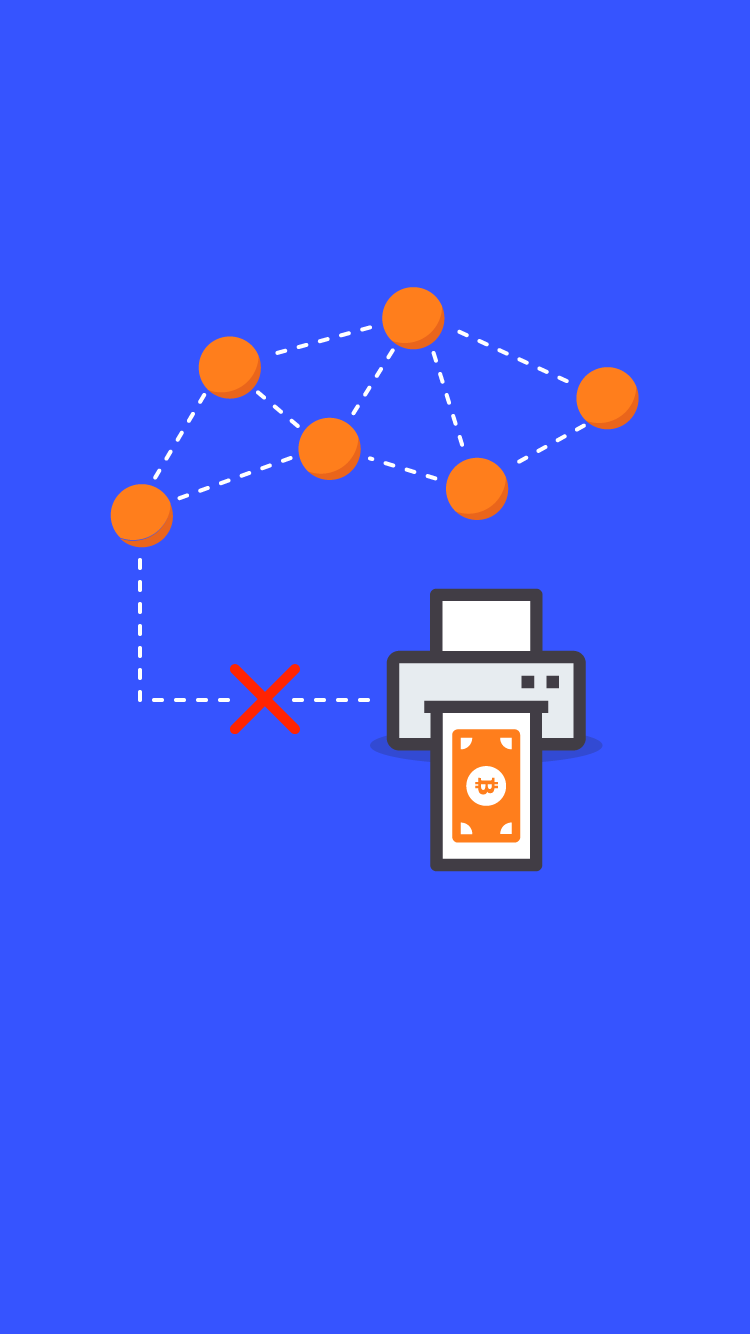
.png?alt=media)
.png?alt=media)
.png?alt=media)
.png?alt=media)







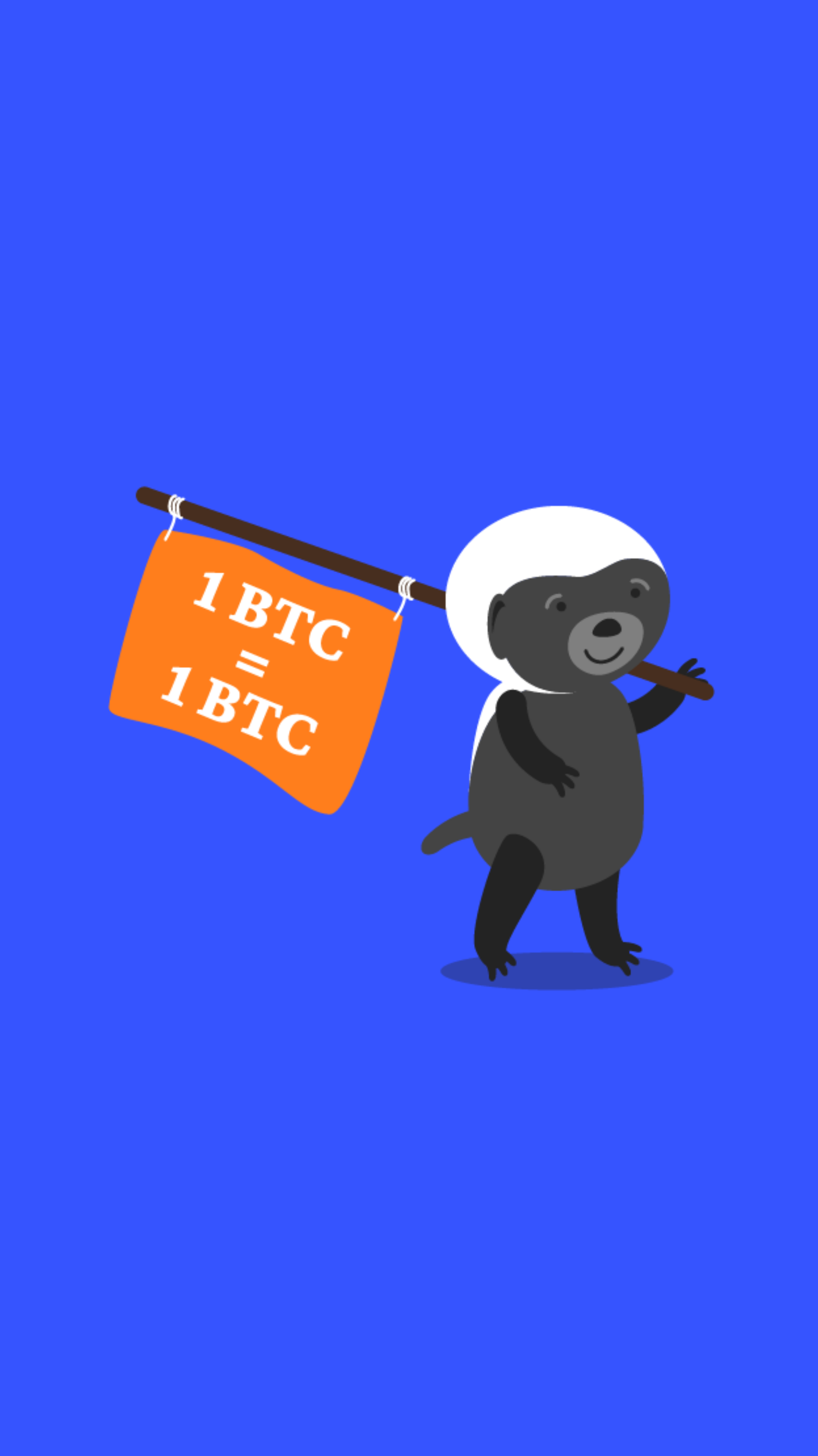









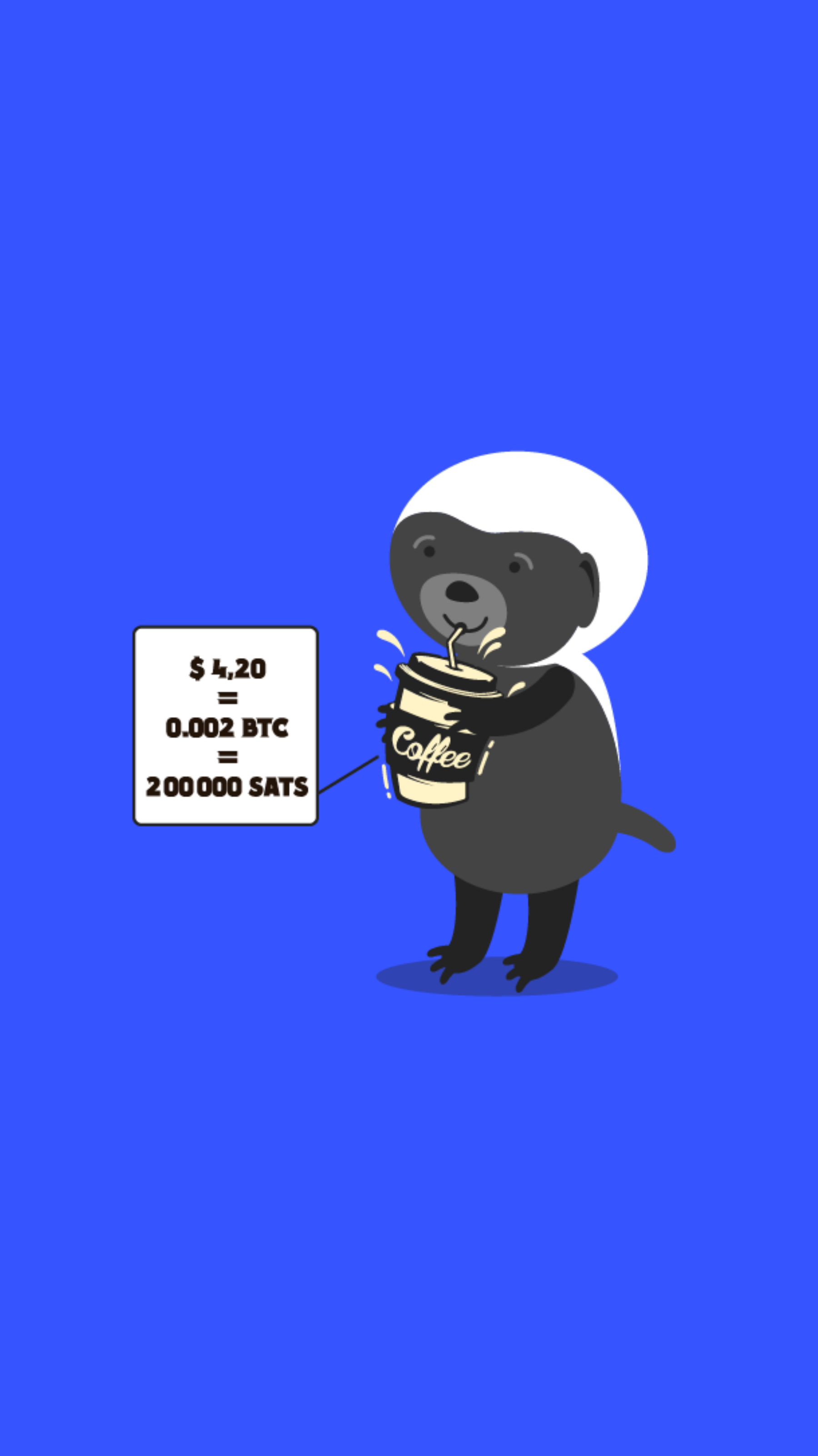





.png?alt=media)